Medical Tech Outlook Weekly Brief
Be first to read the latest tech news, Industry Leader's Insights, and CIO interviews of medium and large enterprises exclusively from Medical Tech Outlook

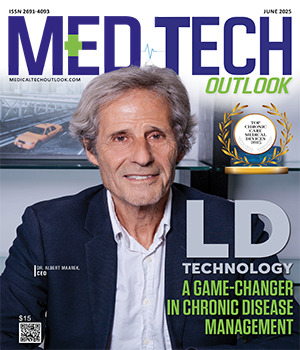
The future of chronic disease management emphasizes early detection of disruptions in the body’s regulatory systems, particularly the autonomic nervous system (ANS) and vascular endothelial function. These systems play a critical role in maintaining homeostasis, and their dysfunction often signals the onset of chronic diseases or complications well before other diagnostic methods can identify them. Such dysfunctions occur when these regulatory mechanisms are overwhelmed and fail to maintain proper bodily functions. Once a chronic disease is diagnosed, damage to the ANS and endothelial function tends to accelerate, leading to secondary complications such as neuropathy and endothelial dysfunction. Neuropathy can manifest through symptoms like burning pain, tingling and numbness in the extremities, orthostatic hypotension, resting tachycardia, and exercise intolerance, while endothelial dysfunction increases cardiovascular risks by impairing nitric oxide production and causing vascular constriction. These complications significantly heighten the risk of cardiovascular events, including myocardial infarction and stroke. Imagine a scenario where physicians could detect these early warning signs—such as autonomic imbalance or reduced endothelial function before irreversible damage occurs. This proactive approach could prevent chronic diseases from occurring and from progressing to severe complications, offering improved patient outcomes and reducing healthcare burdens endothelial function before irreversible damage occurs. This proactive approach could prevent chronic diseases from occurring and from progressing to severe complications, offering improved patient outcomes and reducing healthcare burdens. LD Technology arms healthcare providers with noninvasive, point-of-care medical devices that optimize care for chronic disease. Its patented solutions simplify the assessment of ANS, vascular endothelial system functions and ankle and toe brachial Indices measurements enabling the early detection of chronic disease onset and/or complications. “We don’t diagnose chronic disease itself. The vascular and autonomic dysfunction progression of these diseases pose the greatest risk, and that’s what we focus on,” says Dr. Albert Maarek, CEO. For instance, endocrinologists traditionally monitored a patient’s blood glucose levels and/or HbA1c to assess diabetes management, which primarily indicates whether blood sugar is under control. Diabetes extends beyond being merely a blood sugar problem; it is first a chronic inflammatory condition that affects the autonomic nervous system (ANS), vascular function, and lower extremity blood flow. Consequently, even if a diabetic patient maintains controlled glucose levels, they may still face complications requiring treatment. Therefore, monitoring ANS, vascular health and lower extremity blood flow is just as essential as managing blood sugar in diabetic care.
Clot extraction (thrombectomy) is a critical procedure for stroke patients, achieving technical success rates above 90 percent. However, while thrombectomy effectively removes the clot, it does not address the underlying damage to the brain tissue caused by one, the disrupted blood flow to the brain (ischemia) from the blockage of the brain artery by the clot and two, the secondary damage caused by reperfusion injury. Reperfusion injury is caused by the sudden inflow of blood following the reopening of a clogged brain artery and is largely an inflammatory response accompanied by oxidative stress that exacerbates brain damage. As a result, less than 20 percent of patients experience a full recovery. Therapeutic hypothermia is a well-known neuroprotective strategy that slows metabolism and reduces cell death through multiple protective mechanisms. Yet, systemic (whole body) cooling in stroke patients is often too slow and carries risks such as shivering, cardiovascular instability, infection, and immune suppression. In fact, it typically takes many hours to reduce body and brain temperatures by a few degrees Celsius—a complex undertaking which is often unsuccessful. These limitations make it impractical as a neuroprotective treatment for stroke. In contrast, selective endovascular brain cooling offers a promising alternative by delivering rapid, targeted hypothermia directly to the affected brain tissue. This method achieves protective brain tissue temperatures within minutes without compromising overall body function or introducing widespread systemic complications. Hybernia Medical is positioning itself at the forefront of this innovative approach. The company has developed a catheter-based system designed to provide localized brain cooling immediately following thrombectomy. This solution works within minutes, cooling the targeted brain tissue directly through a catheter introduced via the same arterial pathway used during clot extraction. “We developed a device that cools the brain directly through a catheter system in a highly selective, precise, and fast manner,” says Jae Choi, co-founder and CEO. The approach is built on years of rigorous research and development, evolving through extensive tests and large-animal studies and building on numerous preclinical stroke experiments that have validated both its safety and feasibility. Early clinical signals suggest that when combined with thrombectomy, localized cooling could lead to significantly improved outcomes. Beyond the cooling mechanism itself, Hybernia Medical’s system is engineered with advanced technology to ensure optimal performance. Embedded sensors provide real-time feedback that allows the device to adjust dynamically to the patient’s anatomical and physiological environment. This intelligent design ensures that the cooling process is not only effective but also consistent and safe. The infusion system that drives the cooling process has been optimized for maximum efficiency by using minimal fluid volumes—down to a fraction of a milliliter—which enhances heat transfer at the tissue level without jeopardizing patient safety or causing systemic instability.

It may be unusual for us to pick a company specializing in a technology that has been around since the 1970s as the “Top Cardiovascular Medical Device Company 2025” Intra-Aortic-Balloon Catheters are still an indispensable technology in the treatment of patients with acute heart failure, cardiogenic shock, or undergoing high-risk cardiac procedures, where mechanical circulatory support is required to improve coronary perfusion and reduce myocardial workload. The intra-aortic balloon catheter (IAB) market has long been dominated by two multi-billion-dollar corporations, for whom the IAB business represents only a small fraction of their operations. Unfortunately, this lack of dedicated focus has led to persistent quality issues, with the FDA issuing a warning to hospitals in May 2024, advising against purchasing from one of them due to severe manufacturing quality issues. The other company, while still in the market, has also faced recurring quality concerns over time, most recently last year issuing a Class 1 recall that impacted almost 17,000 IAB catheters. The most pressing challenges with existing IAB catheters revolve around two major issues: balloon inflation failures and catheter kinking during insertion. Inserting a delicate catheter through the femoral artery into the descending aorta presents a high risk of bending or kinking, rendering the device ineffective before treatment even begins. Additionally, once inside the body, the balloon must reliably inflate and deflate with each heartbeat to assist cardiac function. While the two dominant market players have a history of product recalls linked to malfunctioning balloons one company has emerged as the definitive choice solely dedicated to producing high-quality intra-aortic balloon catheters. With nearly 25 years of expertise, Insightra’s meticulous focus on product refinement and innovation has positioned it as the go-to solution for hospitals seeking reliability and performance in a market fraught with supply chain disruptions and quality concerns, where only three FDA-approved manufacturers exist. “Insightra stands for reliable quality–every hospital can benefit from having our Insightra catheters in their inventory and every doctor can rely on our proven effectiveness, reliability, and consistent availability,” says Kai W. Trompeter, President and CEO of Insightra. A Solution You Can Rely On—A Cut Above the Rest Insightra’s differentiation begins with its rigorous testing protocol—every single IAB undergoes 50,000 inflation-deflation cycles before reaching the market, ensuring optimal performance. Additionally, its proprietary pre-wrapping technique guarantees that each balloon unfolds smoothly, preventing the unpredictable failures seen in competitor products. To combat kinking, Insightra introduces an industry-first Exo-Sheath, a stabilizing structure that provides unparalleled maneuverability during insertion, significantly reducing the risk of procedural failure.
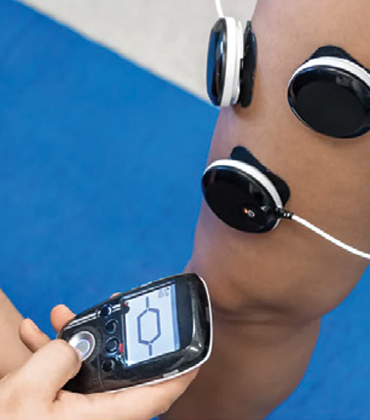
Chronic low back pain disrupts daily life, affecting physical comfort, emotional well-being, and social interactions. However, managing it often involves difficult decisions—such as undergoing surgery or relying on opioids and prescription painkillers. Neither option offers a reliable solution, especially amid growing concerns about inadequate pain relief and addiction. Addressing this urgent need, healthcare now demands an effective, all-in-one approach—one that alleviates chronic pain while preventing opioid use. Harmonic Scientific rises to the challenge with the first non-invasive therapy designed as both an alternative to starting opioids and a treatment to restore normal function—providing lasting relief. Beyond physical comfort, it offers a breakthrough solution for those seeking safer, more effective pain management. “Our non-invasive device was specifically designed to replace opioids in the office or emergency room, offering multimodal pain management without medication. Since we began our research, our technology has also been found to reverse the cause of inoperable mechanical chronic pain—making it a comprehensive solution,” says Amy Baxter, CEO. A Non-Invasive, Drug-Free Approach Low back pain is the leading cause of disability and a major driver of non-cancer outpatient opioid prescriptions. Harmonic Scientific addresses this issue with surgery-free and drug-free therapies, leading the way in pain management. As a National Institutes of Health (NIH)-funded company and a spinoff of Pain Care Labs, it effectively incorporates mechanical stimulation (M-Stim®) with thermal therapies to deliver optimal pain relief through non-invasive devices. DuoTherm™ integrates an array of vibrational frequencies that interact over a large area of the low back fascia and spine-supporting muscles. By combining heat, cold, and pressure with varying locations, frequencies, and amplitudes of M-Stim®, DuoTherm™ targets the spine, muscles, and fascia—accommodating people of different sizes and shapes. Given that no single pain treatment works for everyone, and that the source of pain evolves after an injury, DuoTherm™ provides multiple recovery options, offering a crucial alternative to combat both pain and opioid initiation.


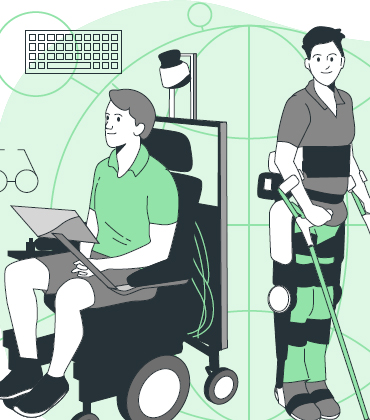
A mobility solution that is lightweight, intuitive and designed to ease—not add to—a Caregiver’s workload has long been overdue. Enter CareGlīder: a next-generation powered mobility chair engineered not just for users, but for the Caregivers who support them. By reimagining how mobility devices function in daily life, CareGlīder delivers a safer, more fluid caregiving experience—blending ergonomic intelligence with emotional insight. At the heart of CareGlīder is its Caregiver-first design philosophy. Traditional powered chairs often prioritize rider autonomy via joystick controls, rendering them unsuitable for those with impaired motor skills. Meanwhile, manual chairs place physical strain on Caregivers, contributing to back injuries, fatigue and loss of independence. CareGlīder addresses this overlooked middle ground—creating a powered chair that is lightweight, modular and optimized for Caregiver-guided transport. With its detachable motor system and a frame that disassembles into 15- and 25-pound components, CareGlīder fits easily into car trunks without compromising durability. Its detachable single-motor differential drive smoothly distributes power to both wheels, responding naturally to the CareGiver’s steering and providing fluid propulsion over varied terrain, while adaptive safety controls—like automatic braking and incline assistance—add confidence and control in motion. “Caregivers deserve mobility equipment that complements their efforts, not complicates them,” says David Carson, CEO and founder. “Our goal is to create solutions that move in harmony with the Caregiver, delivering relief, freedom and dignity.” Developed through direct collaboration with Caregiver communities, CareGlīder’s design process included extensive field testing. Caregivers repeatedly cited weight, portability and injury risk as key barriers to quality care. With millions of family Caregivers in the U.S. lifting, loading or pushing traditional wheelchairs daily, the long-term cost—in injuries, missed work and Caregiver burnout—is substantial. CareGlīder’s modular structure not only reduces this burden but also extends the caregiving lifespan for aging spouses and family members. One such example is Barbara Tamen, an early field tester who struggled to transport her husband Al after a knee replacement left her unable to manage his standard wheelchair. The CareGlīder restored their freedom to navigate daily outings safely and independently—a transformation echoed across other pilot families.
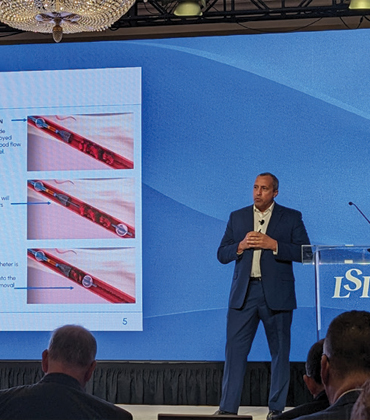
Peripheral vascular occlusions have traditionally been treated using two methods: open surgery or thrombolytic drugs (lytics). While somewhat effective, both carry significant risks. Surgical thrombectomy is a procedure that often leads to surgical complications such as hematoma, blood loss, vessel trauma, and prolonged recovery. Lytic therapy is an easier therapy to prescribe, however it increases the risk of severe bleeding events, including intracranial hemorrhage, is limited for qualified patients, and presents prolonged delivery and recovery time which is extremely costly. Surgical and drug complications present risk, and today’s peripheral interventional solutions continue to have shortcomings while costs skyrocket. Physicians have long sought a safer, more efficient alternative that addresses today’s shortcomings while hospitals and our healthcare system continue to seek treatment options that address the economics in treating peripheral occlusions iCHOR Vascular was founded to address this gap. Co-founded by interventional radiologist Dr. Troy Long and medical device veteran Tim Blair, the company is transforming mechanical thrombectomy by returning to the fundamental parameters of surgical thrombectomy. Rather than building on existing technologies like aspiration and metal coring, iCHOR drew inspiration from the proven surgical Fogarty balloon technique, known for its effectiveness in surgical clot removal. The team modernized this surgical technique into a minimally invasive solution with the iSWEEP platform. “Our goal was to bring the predictability and reliability of surgical clot removal into a minimally invasive system,” says Blair, CEO of iCHOR. “Physicians understand how a compliant balloon works, we simply wanted to give them that same control without the surgical complications. Patients can avoid drug and surgical complications and go home sooner which is good for the patient, the treating physician, the hospital ICUs, and our healthcare system.” A Surgical Concept, Reimagined for Endovascular Care The iSWEEP system offers circumferential wall apposition, enabling a compliant balloon to engage the clot along the entire vessel wall—something that aspiration and other systems fail to achieve consistently. The iCHOR iSWEEP systems have recently demonstrated quick procedure times, no adverse events, no blood loss, and no post-procedure thrombotic issues at 30 days. The iCHOR systems completely eliminate the need for thrombolytic agents, surgery, and because there is no capital equipment; many of these patients are now being treated in same-day surgery settings. Tailored to the complexities of peripheral vasculature, the iSWEEP systems are designed to effectively handle both arterial and venous thrombus. Many patients present with long clot segments in tortuous anatomy—areas where traditional aspiration or power-based systems struggle. The iSWEEP catheter navigates large and small vessel areas with ease, utilizing a balloon-based design that gently sweeps the clot toward a guide sheath for safe removal. All of this replicates the elements of an open surgery but without a cut down on the skin or a vessel. The iSWEEP family includes two specifically tailored devices: iART, a 7F system optimized for arterial clot removal, and iDVT, a 14F system designed for venous clot removal. Both devices leverage the same innovative balloon-based design, offering physicians a versatile and reliable solution for treating both arterial and venous thrombotic conditions with a single device, ensuring precision and efficiency across varying types of morphology and anatomy.
Orthopedic Devices and instruments

Zachary Nelson, Director of Biomedical Engineering, San Carlos Apache
Physiotherapy and Pain Management

Jacob R. Hascalovici, MD, PhD, Division Director of Pain Management, Department of Neurology, Hackensack Meridian Health
Chronic and Long-Term Care

Dino Scanio, DHA, MPH, Multiservice Hospital Director of Clinics, Driscoll Children’s Hospital
Chronic and Long-Term Care

Michelle Gallant Watson, Internal Mobility Manager, Nuvance Health
Chronic and Long-Term Care
Candy M. Corral, Service Line Director, Surgical Services, CHOC Children’s
Chronic and Long-Term Care

Dr. Joseph Ingrassia, Interventional Cardiologist, Director of Vascular Medicine & Endovascular Intervention, Hartford HealthCare
In Vitro Diagnostics

J. Krystal Ascencio, Acting Chairperson of the Department of Obstetrics and Gynecology, Jamaica Hospital

Diagnostics Test KITS
Simon Davies, Executive Director, Teen Cancer America

In Vitro Diagnostic
Will Roden, MBA, MHA, BSN, RN, NE-BC, AACC, FACHE, Administrative Director of Cardiovascular Services/Practice Administrator, Augusta Health
The era of chronic care medical devices is changing at a revolutionary rate, spurred on by technology growth, increasing focus on personalized healthcare, and movement towards patient-focused care.
Breakthroughs Shaping the Future of Medical Devices
Continuing the trend of targeted interventions, peripheral vascular clot removal systems are advancing, enabling quicker and more precise clot removal. Further, other cardiovascular innovations, including advanced stents and heart pumps, are improving treatment outcomes while reducing hospital stays.
Beyond cardiovascular care, advancements in physical rehabilitation are also transforming lives. Mobility solutions, ranging from smart prosthetics to exoskeletons, are enabling patients to achieve greater autonomy while fostering dignity and confidence. By restoring functional movement, these technologies greatly enhance quality of life and support a more active lifestyle.
In this edition of MedTech Outlook, we spotlight the leading innovators driving advancements in medical technology, featuring top chronic care medical devices, cooling catheter devices, wearable pain relief devices, peripheral vascular clot removal systems, advanced cardiovascular devices and next-generation mobility solutions.
On the cover, we feature LD Technology, a game-changer in chronic disease management. Using non-invasive platforms to assess autonomic and vascular functions, LD Technology helps detect early warning signs before irreversible damage occurs.
The edition also features expert viewpoints that highlight key factors in building effective healthcare teams. Christian Alvarez, Regional Director of Rehabilitation at Hartford HealthCare, discusses the importance of fostering a culture of diversity, inclusion, and continuous development within care teams. In addition, Shorin Nemeth, Pain Management Physician at Legacy Health, emphasizes the need for a comprehensive, multi-disciplinary approach to chronic care management, focusing on coordinated efforts to address underlying causes.
As innovations across medical technology continue to progress, new devices and solutions are improving treatment outcomes and patient well-being. We hope this edition of MedTech Outlook provides valuable insights into the breakthroughs shaping the future of medtech. Let us know your thoughts.