Medical Tech Outlook Weekly Brief
Be first to read the latest tech news, Industry Leader's Insights, and CIO interviews of medium and large enterprises exclusively from Medical Tech Outlook
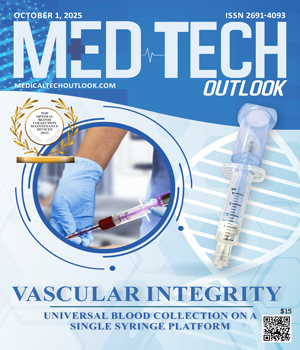
Blood collection has seen continuous innovation over the years, although much of it was aimed at safeguarding healthcare workers and accelerating laboratory throughput. These advancements have unquestionably enhanced safety and efficiency in labs and phlebotomy units. At the bedside, where clinical precision must coexist with patient comfort and time-critical decisions, these same tools often add complexity rather than clarity. For nurses managing high-pressure, time-sensitive draws, every added component or unfamiliar step becomes a potential barrier to delivering consistent care. What’s needed is a solution that integrates intuitively into frontline workflows, streamlining procedures while reinforcing safety and reliability for both clinician and patient. That’s precisely where Vascular Integrity emerges as a game-changer. Designed to simplify, support and elevate bedside blood collection, it redefines what effective, nurse-first innovation should look like in today’s healthcare environments. Instead of introducing another workaround, it brings forward a design that was built for simplicity from the start: the VI ByPass Syringe®—based on the original Brannon PortSyringe, first developed over 30 years ago. Shelved for decades due to patent constraints, the PortSyringe had quietly solved the very problem that today’s systems still struggle with: how to collect blood cleanly and efficiently from any access point, without forcing nurses to choose between speed and safety. The VI ByPass Syringe® reintroduces that vision with the same clarity of purpose. Its closed-system design strips away unnecessary steps, minimizes contamination risk and gives nurses back their workflow. Lab teams see better-quality samples. Patients experience fewer disruptions. And the bedside—too often treated as the end of the line in innovation—finally gets a solution designed to meet it on its terms. “We’re bringing back a tool that puts control and confidence back in the hands of nurses,” says Bob Brown, co-founder. “This device isn’t just cost-effective; it’s clinically smart. By eliminating mid-procedure component changes and reducing the number of access points, we’re cutting down on handling errors, protecting the sterile field and making blood collection safer and simpler at the bedside.” The Closed-System Syringe that’s Redefining Bedside Blood Collection Even though there are many all-in-one blood collection devices available in the market, their workflows are built on open steps, disconnecting, swapping devices and exposing ports. Each one increases the risk of contamination. The VI ByPass Syringe® is different, as it seals the entire process from the first pull to the final flush.
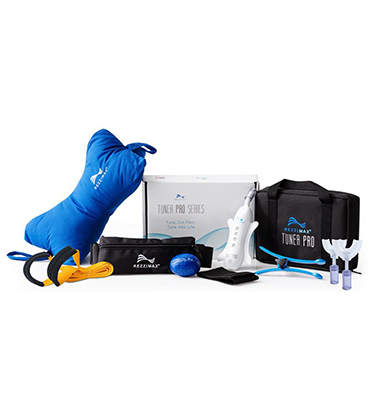
Chronic pain, migraines, and stress-related disorders aren’t just inconveniences—they steadily erode resilience and quality of life. These challenges are often linked to an overworked nervous system, where the vagus nerve (the body’s tenth cranial nerve) helps regulate vital functions and calm the body. While pain and stress trigger quick reactions, this nerve quietly works to restore balance and promote healing. That’s why strengthening its core function matters more than turning to conventional approaches that only provide temporary relief. Recognizing this overlooked solution, Rezzimax steps forward with non-invasive devices that gently stimulate the vagus nerve, controlling stress signals, and helping the body recover its natural rhythm. With a focus on retraining the nervous system for enhanced performance, the company empowers individuals to break free from pain and stress, reclaiming their energy and resilience. “Improving vagus nerve efficiency unlocks the body’s potential for healing, and our device makes this possible by fine-tuning vagal tone for better balance,” says Sharik L Peck, CEO and physical therapist. Rezzimax’s flagship device, the Tuner Pro II, is a handheld medical device that enhances nerve function and blood flow in targeted areas non-invasively. Designed to promote natural relief, the device can alleviate pain associated with conditions such as migraines, sinus congestion, neck pain, and injuries. It delivers gentle vibrations through the recurrent laryngeal branch, which controls essential vocal cord muscles and senses in the lower throat.

A new wave of surgical innovation is pushing the boundaries of what minimally invasive surgery can achieve. Instead of scalpels, ports and puncture wounds, complex procedures can now be performed entirely through natural orifices. Slater Endoscopy is at the forefront of this transformation, equipping surgeons with tools that reshape patient outcomes, reduce recovery times and open new treatment possibilities for conditions that once required open or laparoscopic surgeries. The Ensizor® endoscopic scissors made with John Starkey, Co-founder and CEO patented Edge-Flex™ technology is designed to make advanced minimally invasive procedures more accessible to surgeons. “Surgeons can cut both sutures and tissue with our Edge-Flex™ scissors; a single-use device that’s sharper, smaller and more versatile than anything else in the industry,” says John Starkey, Co-founder and CEO. Slater Endoscopy’s Ensizor has a unique two-piece design, a razor-thin blade laser-welded to a rigid back. Unlike conventional scissors, this design keeps the blade sharp and stable, allowing it to precisely cut delicate tissue while slicing thicker sutures without causing bending. Measuring just 2.6 millimeters in diameter and nearly 8 feet in length, it will easily pass through an endoscope for procedures involving esophagus, stomach or colon cancers, as well as bariatric procedures through natural orifices. This eliminates the need for ports or insufflation. Building on this design, Slater Endoscopy offers two device lengths; one for upper GI procedures and another for colonic surgery. Most existing endoscopic scissors are of the reusable type, less effective at cutting and not indicated for cutting sutures. By contrast, the Ensizor single use endoscopic scissors are FDA- and CE-cleared for cutting both tissues and sutures. This combination of precision and reliability has made it the preferred choice for demanding endoscopic procedures. Slater Endoscopy demonstrated Ensizor’s precision and consistency through animal studies conducted with a leading endoscopic surgeon. These studies confirmed its effectiveness, supporting regulatory approval and a successful market launch. Early traction then attracted partnerships with bariatric companies and major distributors, culminating in an agreement with one of the world’s largest medical device distributors, a move set to accelerate global adoption.
“Just as no two women can slip into the same pair of jeans and expect a perfect fit, breast pumps should not be one size fits all. They should be customizable. Everybody is different, every breastfeeding journey takes its own course and each mother’s needs for comfort, fit and milk supply vary widely,” says Dina Shanowitz, founder and CEO of Zomee. The Zomee Fit Wearable Hands-Free Pump is a reminder that convenience doesn’t have to come at the cost of performance. While most portable pumps trade power and capacity for convenience, the Zomee Fit eliminates that compromise. Fully cordless and discreet enough to slip into a bra, the Zomee Fit delivers hospital-grade suction up to 280 mmHg, strong enough to maintain supply even for moms who struggle with output. Its quiet motor, under 48 decibels, keeps pumping private in workplaces or shared spaces, while seven-ounce containers per side— larger than most on the market—help mothers go longer between sessions. The Zomee Fit pairs performance with deep personalization and features three core pumping modes—Stimulation, Expression and 2-Phase Premium, each with nine adjustable levels. Stimulation mode mimics the quick, light suckling of a newborn to trigger letdown, while Expression mode follows with a steadier rhythm to optimize milk removal. The 2-Phase Premium setting blends both patterns, replicating a baby’s natural feeding cycle to promote faster letdown and a more consistent supply. In addition, Zomee adds features designed for real-life needs. For example, Zomee has an exclusive Alternate Mode Technology that cycles suction between breasts instead of drawing from both at once, easing nipple fatigue and encouraging stronger flow by mirroring how babies naturally nurse. For inclusivity, the Zomee Fit Shabbat Mode allows Orthodox Jewish mothers to preset the pump before the Sabbath, making it possible to continue nourishing their babies while honoring their faith. Zomee has also designed solutions for challenges often overlooked. For example, up to 20 percent of mothers have flat or inverted nipples, yet most standard pumps assume the nipple will naturally protrude into the flange tunnel. When it doesn’t, suction weakens, output drops and discomfort follows. With nipple correction mode, the Zomee Fit gently draws the nipple into place and holds it correctly aligned, improving comfort and milk flow.

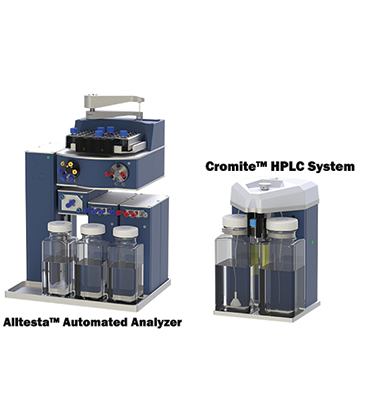
Most breakthroughs begin with a single question: What if there’s a better way? For Yury Zelechonok, founder of SIELC Technologies and an organic synthetic chemist by training, that moment came in 2002, when he recognized a crucial gap in the chromatography market. “Traditional columns just relied on a single type of molecular interaction or simply blended different separation media,” says Zelechonok. “Instead, we developed a new column that combines two separation mechanisms in one bonded surface—creating a breakthrough in column chemistry.” His intent-led quest resulted in the development of the first true mixed-mode chromatography column at SIELC Technologies, an American scientific and manufacturing company specializing in HPLC innovation. The company has successfully defied decades of convention and expanded the possibilities of separation science. SIELC engineered a single stationary phase with dual interaction properties, achieved through a specially synthesized ligand bonded to silica. This breakthrough also produced an unexpected synergy, where two mechanisms worked together to deliver results that neither could achieve alone. But innovation at SIELC didn’t stop with columns. Having reimagined the science of separation, the company turned its attention to the instruments themselves. Traditional HPLC machines were powerful but also large, expensive, and dependent on software tied to a single PC. These limitations made it difficult for smaller labs, startups, or field-based organizations to access high quality chromatography without prohibitive costs or infrastructure. About five years ago, SIELC saw an opportunity to rethink the model. It developed two instruments now central to the company’s portfolio: the compact Cromite and the advanced automated Alltesta™. While conventional HPLC systems are large and often weigh bulky and often weigh dozens of kilograms, SIELC analyzers weigh just a few kilograms, making them uniquely portable. Both systems run on minimal power, enabling operation in a standard lab hood, a small workspace, or even the field with something as simple as a car battery. Despite their size and price, their performance brings chromatography within reach for customers who once saw it as unattainable.
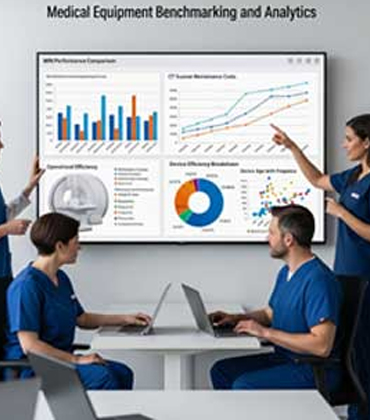
Hospitals now stand at the crossroads of rising demand and financial pressure. Reimbursements continue to decline, recruiting and retaining critical staff is increasingly difficult, and patient volumes only go one way—up. Add rising supply costs to the mix, and the margin for error all but disappears. Against this backdrop, Miga Solutions has emerged as a critical ally, helping hospitals tackle one of the few cost centers still ripe for savings: medical equipment. Founded in 2004, Miga began with a simple question: how can the right information unlock the massive savings hidden within hospital medical equipment? “Hospitals have pushed savings in supplies and labor to the limit, but medical, lab, and IT purchases still carry hidden costs,” says Peter Robson, president and CEO. “We enable hospitals to cut through the complexity of the healthcare supply chain with the intelligence to validate pricing and the support to maximize savings, so every dollar goes further in sustaining the care their communities rely on.” For more than a decade, Miga has delivered this clarity through its Equipment Value Management System (EVMS), a SaaS platform leveraging 50,000+ data sources to show hospitals potential savings. Rather than wading through thick reports, hospitals get a simple color-coded rating—red, yellow, or green—indicating whether a price is in line with the market. For staff stretched across extra shifts, having information distilled into a single, clear signal can mean the difference between timely action and costly delay. The company’s stance is that benchmarking alone doesn’t deliver results, but realized savings do. On average, Miga hospital clients see 12 to 16 percent in savings each year, about $30,000 for every bed. It’s money they can point to, not just a line on a report. These savings are achieved without product substitutions or service cuts. Hospitals can put those dollars to work, whether it’s hiring staff, fixing facilities, or strengthening patient care. Miga reinforces this with a guarantee: if annual savings realized with EVMS do not exceed the cost of the subscription, Miga refunds users for the difference. The numbers are best understood in practice. A 400-bed community hospital, working with a $4 million budget for imaging equipment, found itself stalled in negotiations. After long discussions, the supplier’s lowest offer was still $4.8 million. EVMS benchmarking showed that the price could, and should, drop further. Using Miga’s data and advisory support, the hospital reset its negotiations. The contract closed around the $4 million budget, delivering roughly $800,000 in realized savings on the same equipment. For administrators, the win wasn’t only financial, but also the confidence that came with securing the right deal.

In Vitro Diagnostics

Mike VanDerwerken, Director of Pharmacy, Saratoga Hospital
In Vitro Diagnostics

Cliff Numark, Senior Vice President and Chief of Marketing, Vitalant
In Vitro Diagnostics

Benjamin Kummer, Director of Clinical Informatics in Neurology, Mount Sinai Health System
In Vitro Diagnostics

Heeteak Chung, Ph.D., MBA, Director of Medical Physics, Baylor Scott and White Health
In Vitro Diagnostics

Steve Mantegani, Vice President of Operations, NovaCare Prosthetics & Orthotics
In Vitro Diagnostics

Erik Holzwanger, MD, ABOM-D, Director of Endoluminal Surgery and Bariatric Endoscopy; Therapeutic Endoscopist, Tufts Medical Center; Michael Talanian, MD, Advanced Endoscopy Fellow, Tufts Medical Center; Erika Tsuchiyose, BA, MD/MPH Student, Tufts University School of Medicine
In Vitro Diagnostics

J. Krystal Ascencio, Acting Chairperson of the Department of Obstetrics and Gynecology, Jamaica Hospital
In Vitro Diagnostics

Todd S. Danos, Vice President, Hospital Operations, Manning Family Children’s
In Vitro Diagnostics

Julio Martinez-Silvestrini, Medical Director, Baystate Health

In Vitro Diagnostics
Justin Floyd, Director of Nursing- Critical Care Service Line, Peace Health

In Vitro Diagnostics
Bill Dailey, Chief Medical Information Officer, Golden Valley Memorial Healthcare
Blood collection devices enhance efficiency, accuracy, and safety through innovations in automation, data integration, and user-friendly designs in healthcare.
Medical equipment benchmarking and analytics enhance healthcare operations by optimizing utilization, guiding procurement, reducing costs, improving patient care, and fostering technology adoption.
Redefining Medical Care with Technology
AI-driven predictive performance analytics is gaining traction in medical equipment benchmarking and analytics. Hospitals and clinics are leveraging machine learning to monitor equipment usage, forecast maintenance needs and benchmark performance across facilities.
Minimally invasive and flexible endoscopic scissors are advancing and supporting robot-assisted surgeries with precision, real-time imaging integration. Surgeons can now navigate complex anatomies with higher accuracy and enhance safety and efficacy.
Wearable hands-free breast pump manufacturers are innovating with IoT-connected, app-integrated designs that are improving maternal care. Modern devices are tracking pumping sessions, monitoring milk output and syncing data with health apps, offering nursing mothers a seamless experience.
Non-invasive neurological devices are now being equipped with AI-powered brain monitoring and diagnostics. They are providing physicians real-time neurological data for early detection of disorders without requiring invasive procedures.
Optimal blood collection and maintenance devices are also evolving with automated sample handling and contamination prevention systems that integrate robotics, barcoding and environmental monitoring to ensure sample integrity, enhancing patient safety and diagnostic reliability.
This edition of Medical Tech Outlook brings the latest developments in medical equipment benchmarking and analytics, minimally invasive and flexible endoscopic scissors, wearable hands-free breast pump manufacturer, non-invasive neurological device and optimal blood collection devices.
It features thought leadership articles from industry experts. Erik Holzwanger, director of endoluminal surgery and bariatric endoscopy and therapeutic endoscopist at Tufts Medical Center, discusses strategies for breaking the limits of conventional resection techniques with endoscopic submucosal dissection. J. Krystal Ascencio, acting chairperson of the department of obstetrics and gynecology at Jamaica Hospital, addresses the often-overlooked link between pregnancy complications and long-term cardiovascular risks for women.
The edition also features Vascular Integrity, a leading medical device company. Its VI ByPass Syringe is a single-access, closed-system device that standardizes blood draws across peripheral, central and arterial lines.
We hope this edition gives you greater insights into the transformations in healthcare brought on by some of the most cutting-edge medtech solutions.