Medical Tech Outlook Weekly Brief
Be first to read the latest tech news, Industry Leader's Insights, and CIO interviews of medium and large enterprises exclusively from Medical Tech Outlook
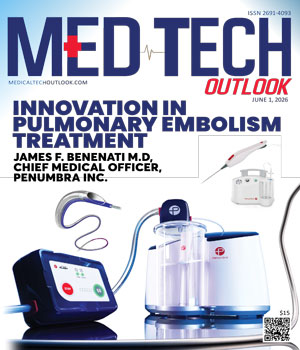
Acute pulmonary embolism (PE) is common, affecting more than 300,000 people in the U.S. each year. The severity of these blood clots in the lungs cannot be understated. They are complicated to diagnose – there are many variable clinical presentations— and, if not treated quickly, can at times be life-threatening. When I first became a practicing interventional radiologist 30+ years ago, treatment for PE was limited to anticoagulation therapy. This is still considered standard-of-care today. More recently, thrombolytic therapy has become common place for life threatening pulmonary emboli but this therapy comes with a host of potential complications. Patients may experience excessive bleeding and use of these thrombolytic agents also require stays in monitored care units or the intensive care unit (ICU). Over the past decade, advancements in technologies have allowed for the development of potentially more efficient clot removal methods for patients with pulmonary emboli that are causing severe symptoms such as shortness of breath, tachycardia (fast heart rate), low blood pressure, and other life-threatening symptoms. The following is a brief overview of how the treatment of PE has evolved beyond drug treatment to include advanced technology.
What foundational considerations guide initial coating discussions for medical device requirements? When a medical device company brings a coating challenge to Formacoat, the first question is never about materials. It is about the device, its composition, functional requirements, and the constraints the customer is working within. That starting point is not always how coating decisions are approached. Across much of the contract coating space, recommendations are often influenced by existing capabilities rather than what the device specifically requires. A decade of consolidation has made that more challenging, narrowing choices and pushing costs beyond the reach of many smaller companies. How does Formacoat structure its infrastructure to support customer-centered coating evaluations? Formacoat, a contract coating application company focused exclusively on medical devices, was founded to work the other way around and has spent nearly 25 years building the infrastructure to support that approach. That infrastructure centers on one core principle: the customer should be able to evaluate every viable option in a single engagement. Where most device companies navigate a fragmented landscape of vendors, separate conversations, and data gathered under different conditions, Formacoat consolidates the selection process into one place. Customers evaluate multiple coating options using comparative data generated on the same equipment, eliminating variability and significantly reducing the time, effort, and operational complexity typically required to arrive at a decision. Instead of spending months coordinating across suppliers, customers can move through selection, validation, and decision-making within a structured, unified process. The evaluation is structured around the device's requirements and the customer's budget, producing a decision they can stand behind. “We just want to find the right coating for our customers' devices that fits both their needs and wallet,” says Todd Michael Paulsen, vice president..


Sandra M Skovlund, Founder and CEO
What limitations exist within current ear tube technologies used for middle ear ventilation today? Ear tubes have long been a routine component of surgical ear and hearing care, yet the technology has seen little meaningful innovation. Current tubes are designed to remain in place for extended periods and are made from durable materials, even when only shorter-term ventilation is needed. This can expose patients to risks such as perforation, requiring further surgery or painful removal procedures that increase the cost of care. Skovlund Medical Products offers a new device for the treatment of serous otitis media and Eustachian tube dysfunction. This novel device provides approximately six weeks of middle ear ventilation while maintaining the rigid structure of the lumen, with the flange acting as a scaffolding to guide healing of the perforation as the device resorbs. This time frame allows middle ear fluid to clear and mucosal healing to occur. “Our solution improves quality of life and decreases the cost of care by eliminating the need to monitor an indwelling foreign body, by reducing follow-up visits and minimizing complications due to its short-term use,” says Sandra M Skovlund, founder and CEO. How does clinical validation support adoption of new myringotomy tube technologies within otolaryngology practices? Skovlund’s myringotomy tube is backed by three patents and early clinical validation through an IRB-approved pilot study using the device on human patients. This study demonstrated effective ventilation for the clinically intended time and a 100 percent tympanic membrane healing rate as the device dissolved. These findings were published in Dr. Skovulnd’s paper— Feasibility of an Innovative Absorbable Ventilation Tube Designed to Provide Intermediate-Term Middle Ear Ventilation—in a peer-reviewed journal. Clinical need has been established through surveys conducted at state and national meetings of the Academy of Otolaryngology-Head and Neck Surgery, where nearly 90 percent of Otolaryngologists were enthusiastic to have the device as an option. .
What risks are associated with conventional catheter designs in neurovascular surgical procedures? In neurovascular surgery, a millimeter can mean the difference between a good or catastrophic outcome. Precision is crucial. As surgeons guide a catheter through the brain’s delicate, winding vessels, even the slightest instability can cause irreversible damage—dissection, hemorrhage or stroke. For decades, these risks were accepted as the unavoidable tradeoff when using conventional catheter designs. Radical Catheter Technologies set out to eliminate that compromise. The core technology is its patented ribbon-based catheter—a fundamentally different approach to catheter architecture. Instead of relying on traditional segmented polymer tubes reinforced with metal braids or coils, the Radical Catheter is constructed from multiple polymer ribbons fused together to achieve a unique hybrid mechanical structure. This approach results in a device that is soft and highly navigable at the tip, yet also stable and supportive throughout the entire shaft. It conforms naturally to tortuous anatomy without straightening or distending vessels, while remaining stable in the vessel without axial or rotational backup, delivering both safety and performance. “We offer a safer catheter system,” says Brian Martin, co-founder and CEO. “Our catheter performs exceptionally without applying excessive stress to the delicate arterial system.” Eliminating the Tradeoff Between Safety and Performance How does the ribbon-based catheter design eliminate the tradeoff between flexibility and stability? The company’s breakthrough began with a patient, prompting Martin to rethink the fundamental design of a catheter. While observing a neurointerventionalist perform a challenging procedure, he noticed an intermediate catheter torque out of position and become rotationally unstable, tearing the patient’s anterior cerebral artery. That moment exposed a fundamental flaw in legacy catheter design. Traditional neurovascular catheters are engineered with competing mechanical demands: the distal shaft needs to be flexible for navigating the tortuous and windy vessels, but too flexible leads to rotational and axial instability, which could damage the delicate vessels. The proximal shaft needs to be stiff and pushable, but too stiff adds undue shear stress on the vessel well, also leading to potential vessel damage. This is a delicate balance of competing goals, and what’s right for one patient’s anatomy isn’t necessarily right for another’s. .

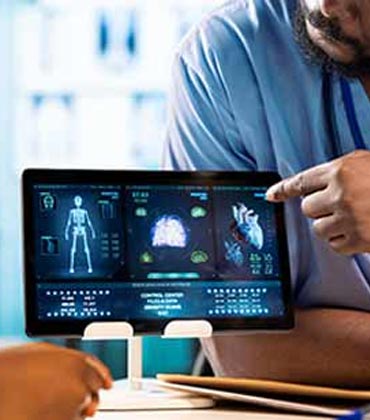
Medical aesthetics and the cash-based care model are growing rapidly. However, many physicians still face challenges in converting consultations into comprehensive treatment plans, with discussions often shaped by patient-led concerns rather than provider-driven strategies. What role do imaging systems play in structured aesthetic consultations? EMAGE MEDICAL® enables clinics to move from transactional consultations to structured, revenue-generating treatment plans through its range of skin imaging systems. For nearly 20 years, the company has operated within the medical aesthetics space, catering to med spas, dermatology clinics and plastic surgeons. Its Image Pro® line, comprising SUNLITE, HYBRID and Halo, moves care beyond visible issues toward broader, condition-based approaches. Designed for varying feature and practice requirements, these systems collectively address major skin concerns like pore size, oil levels, wrinkles, sun damage, texture, pigmentation and vascular conditions. It also offers a portfolio of aesthetic devices that expand beyond skin imaging and analysis to tackle skin rejuvenation and collagen stimulation through traditional microneedling, radiofrequency microneedling, hair restoration and hydradermabrasion systems. “We’re the gold standard in skin imaging, with high-resolution systems that offer the level of image clarity needed for reliable evaluation across a range of skin conditions,” says Sally Bevans, CEO. Data-Driven Skin Analysis for Structured Clinical Decisions How does clinical data support more consistent skin condition evaluation across clinics? EMAGE MEDICAL®’s skin analysis algorithm and database draw on nearly two decades of global data to support accurate, consistent evaluation. Clinical studies have shown Image Pro® to achieve up to 98 percent accuracy in identifying skin conditions compared to visual observation by dermatologists. .
Transcatheter therapies have improved outcomes in aortic stenosis, but for younger patients, long-term durability remains a defining limitation. For Mano Thubrikar, a professor, scientist, and author of “The Aortic Valve”, this is more than an abstract industry challenge; it's a responsibility shaped by a clear gap in patient care. What patient need pushed the valve concept beyond academic research? In 2004, that gap became personal for Thubrikar when a 72-year-old mother called him about her 36-year-old son with severe aortic stenosis. Having explored every available treatment and found none suitable for him, she asked why someone who had written extensively about heart valves had not developed a solution her son could use. That question marked a turning point. It exposed a disconnect between scientific understanding and available treatment options, which drove Thubrikar beyond academic research toward developing a practical solution. He began applying his research on aortic valve function to design a valve specifically for younger patients with limited long-term options. This effort laid the foundation for his company, Thubrikar Aortic Valve, and its pursuit of a fundamentally different approach to transcatheter aortic valve replacement (TAVR) systems. “Our goal is to expand TAVR across all patients, down to Age 40, eliminating their need for open-heart valve surgery,” says Thubrikar, President. TAVR offers a less invasive alternative to surgery and has rapidly expanded across hospitals. As adoption increased, the field also shifted toward acquisition-driven expansion, with companies prioritizing startup technologies over advancing foundational valve design. As a result, many systems entered the market without fully incorporating established durability principles from surgical valve development, contributing to repeat interventions in younger patients within just four to six years. By 2024, the pattern had evolved into what clinicians described as a tsunami of upcoming reinterventions, highlighting the gap between widespread clinical adoption and long-term device performance at a structural level..


Georgia was recently diagnosed with a chronic condition and received her first prescription containing an injectable medication. Instead of feeling nervous, she opened the box and confidently self-administered the injection, completely at ease. The reason? Before receiving her prescription, the pharmacy provided Georgia with a reusable trainer device, along with digital guides and detailed instructional videos that showed her exactly how to use it. But how was this even possible? Noble is the answer. In collaboration with healthcare systems, patient advocacy groups, and others, the company works with pharmaceutical manufacturers to select or design delivery devices best suited to each therapy and patient population. Their goal is to ensure that the tools patients use are as seamless and easy to operate as possible. The company also designs and engineers realistic, reusable trainer devices that patients can use to practice self-administration safely at home. The digital guide adds the finishing touch, making the process even smoother. Noble understands that ease of use is the most significant factor determining the success or failure of self-administered medical treatments. Through its unique approach to design and patient preparedness, the company helps pharmaceutical partners develop training and onboarding solutions that promote adherence and encourage long-term use. “Patients often forget, hesitate, or abandon at-home treatment altogether when they lack proper guidance,” said Joe Reynolds, Head of User Experience Services. “We truly speak the language of patients, helping pharmaceutical brands connect on a deeper level to empower and support those they serve.”
Medical Imaging Systems

Armine Smith, Director of Urologic Oncology, Sibley Memorial Hospital
ENT Devices
Ugochukwu O. Egolum, MD, FACC, Chief, Department of Cardiology, Northeast Georgia Health System
In Vitro Diagnostics

Benjamin Kummer, Director of Clinical Informatics in Neurology, Mount Sinai Health System
Medical Device Design and Development
Dan Dror Siman-Tov, Senior Director of R&D , Meridian Bioscience
Medical Aesthetics
Kevin Orsak, Wound Care Program Manager, UT Southwestern Medical Center
Diabetes Care

Gresham Richter, Chair of the Department of Otolaryngology – Head and Neck Surgery, UAMS
Wound Care

Dr. Colin Boswell, Co-Owner, Dr. Jonny Norris, President, and Sam Cocke, Communications Manager, Mon

Medical Device Design and Development
Tony Anzalone, VP of Global Sales and Manufacturing Solutions, Cordis

Innovative Medical Solutions
Dr. Haniff Murray, Clinical Engineer/Alternate Manager, Memorial Healthcare System
Advanced drug delivery systems improve treatment precision, patient compliance, therapeutic effectiveness, personalized medicine, and modern pharmaceutical innovation globally.
Emerging neurovascular catheter trends focus on precision navigation, advanced materials, imaging integration, and ergonomic design to improve safety and procedural efficiency.
Advancing Precision Through Healthcare Infrastructure
This edition recognizes Formacoat as the Medical Device Contract Manufacturing Coating Solutions of the Year 2026 for challenging the fragmented approach that has long defined medical device coating selection. Through an agnostic evaluation model spanning more than 90 coatings from 45 vendors, the company enables manufacturers to compare solutions within a single development process, reducing complexity while improving efficiency and scalability.
Radical Catheter Technologies, recognized as the Top Emerging Neurovascular Catheter Technology 2026, for advancing a ribbon-based catheter architecture that improves navigational control and stability during neurovascular procedures. Its design addresses one of the field’s longstanding engineering constraints: balancing flexibility with procedural support in delicate vascular anatomy.
Skovlund Medical Products, recognized as the Top Myringotomy Tube Placement Device 2026, is rethinking ear tube intervention with a resorbable design engineered for short-term ventilation and natural healing. Using clinically familiar materials, the device reduces complications, follow up procedures and the burden of long-term implants while supporting more targeted patient care.
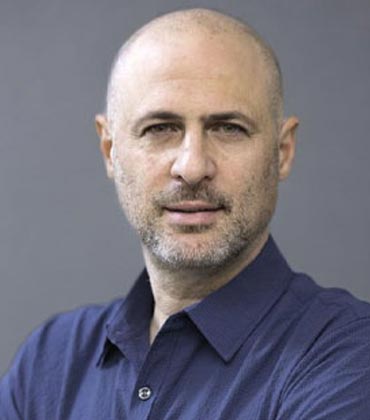
The issue also highlights leadership perspectives shaping healthcare operations and product execution. Dan Dror Siman-Tov, Vice President Research and Development, Diagnostics, Meridian Bioscience Inc., examines the role of cross-functional R&D leadership in product development and regulatory execution. Kevin Orsak, Wound Care Program Manager at UT Southwestern Medical Center, explores how organizations can leverage operational disruption to redesign workflows and improve long-term outcomes.
The companies and executives featured in this edition reflect an industry moving beyond isolated breakthroughs toward integrated systems designed for precision, scalability and clinical impact. We invite you to explore the strategies and technologies driving that shift.