Medical Tech Outlook Weekly Brief
Be first to read the latest tech news, Industry Leader's Insights, and CIO interviews of medium and large enterprises exclusively from Medical Tech Outlook

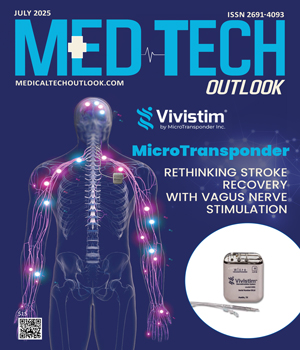
For millions of stroke survivors, recovery no longer means settling for physical limitations; it can mean breaking through them. Where progress once plateaued after traditional physical and occupational therapy, a new approach is helping patients move beyond that barrier. MicroTransponder®, Inc., a commercial-stage medical technology company, is changing the lives of stroke survivors with the Vivistim® Paired VNS™ System—a medical device that pairs vagus nerve stimulation (VNS) with rehabilitative stroke therapy. By harnessing the brain’s natural ability to rewire, MicroTransponder offers patients a powerful path to healing, renewed confidence, lasting independence, and something often in short supply: real, measurable progress. At the helm of the company driving this meaningful breakthrough is CEO Richard Foust, a leader who has transformed MicroTransponder from a research-based startup into a commercial-stage pioneer in stroke care. “We are not tweaking an old system—we have created a new one. We spent years developing a patented mechanism that pairs vagus nerve stimulation with occupational and physical therapy to help stroke survivors regain upper limb function well beyond what they had been limited to with traditional therapy,” explains Foust. A Scientific Breakthrough The foundation of MicroTransponder’s innovation was laid over a decade ago, when a landmark paper in Nature outlined a new approach to rewiring the brain. The therapy is based on the principle of neuroplasticity—the brain’s ability to reorganize and form new connections. Stimulating the vagus nerve during functional activities that were lost as a result of stroke helps stroke survivors accelerate motor recovery by strengthening the appropriate neural pathways. Traditional stroke therapies rely on repetition to help patients regain arm and hand function, but progress often stalls. MicroTransponder’s system offers an evidence-based therapy to help stroke survivors regain meaningful improvements in arm and hand function.
The strongest, most advanced pain treatment is BioWavePENS, an in-office medical procedure conducted under the supervision of a physician, using a BioWavePRO device combined with a unique patented pair of sterile, single-use microneedle percutaneous electrode arrays, that deliver up to 72 hours of continuous relief from a single 30-minute session. Each percutaneous electrode is comprised of over 1000 microneedles each 0.74mm in length that are inserted through the epidermis and provide a direct conductive pathway through skin, bypassing the impedance and other electrical properties of skin, which allow for deeper penetration of the active electrical field which provides enhanced efficacy and prolonged pain relief. Percutaneous electrodes are comfortable for patients and feel like Velcro to the touch. Initially developed for professional sports, BioWave was first introduced through a clinical study with the New York Giants, focusing on treating acute and chronic sports injuries. Since then, BioWave has been purchased by the majority of professional sports teams in the NFL, MLB, NBA, NHL and MLS, helping athletes manage pain and accelerate recovery and return to play following injury and surgery. BioWave is making a real difference in the lives of veterans. What started in just two VA hospitals in 2017 has now expanded to over 250 facilities nationwide, where the company is offering both non-invasive and percutaneous alternatives to traditional pain management. By addressing pain without relying on opioids or invasive procedures, it is helping veterans move more freely and reclaim a better quality of life. For those seeking relief at home, BioWaveHOME empowers patients to reduce hospital visits while maintaining prescription-strength relief. On the move, BioWaveGO becomes a portable ally that allows users to manage discomfort. One of the newest additions to BioWave’s medical device portfolio are BioWraps, which combine the benefits of electrical stimulation with compression in a wearable electrode garment. BioWraps are a unique patented design that utilizes very large fixed silver fabric electrodes, that allow for the treatment of up to 6X the volume of tissue as compared to conventional electrodes, while maintaining comfort and flexibility. Currently available for the back, knee, foot and ankle, hand and wrist, thigh and calf, BioWraps are also being developed for additional applications. This breakthrough has been particularly effective in relieving phantom limb pain, offering comfort where few solutions exist. BioWave is beneficial for menstrual cramps, pelvic floor pain (including interstitial cystitis) and migraines. For migraine sufferers, placing electrodes on the back of the neck or head (bi-occiput placement) stimulates the occipital nerve, creating a gentle, soothing sensation that radiates to the crown of the head, helping to ease pain and tension..


Advancements in prosthetics and orthotics are redefining human mobility and functionality through innovations. They are instrumental in restoring lost capabilities and pushing the boundaries of physical rehabilitation, enabling individuals to pursue more active and fulfilling lifestyles. This drives a new era of potential for those in need. Globus Medical is leading the charge in the field of musculoskeletal systems, specializing in the development of medical devices for prosthetics and orthotics to improve patients’ quality of life. The company’s exclusive attention to advancing surgical practices has positioned it as the fastest-growing company. Its dexterity to innovate and deliver exceptional clinical support steers it ahead of the competition in the healthcare industry. Its services comprise an impressive array of spine products, including anterior and posterior cervical and lumbar, HEDRON 3D printed titanium interbody spacers and expandable technology. These address various spine ailments, including degenerative conditions, deformity, tumors and trauma. The company also develops solutions for interbody fusion, corpectomy and interspinous fixation, which allow for intraoperative customization per patient’s anatomy and can help save surgical time by eliminating progressive testing. “With a relentless focus on changing patient lives, we’re combining our differentiated portfolios and talented teams to reach more customers as we advance spine and orthopedic care globally,” says Daniel Scavilla, president and CEO. Globus Medical’s proficiency is rooted in understanding the needs of surgeons and patients alike, ensuring that its products meet the highest standards of quality and effectiveness. Advancing Surgical Precision And Patient Care A standout feature of Globus Medical is its Excelsius Technology, which seamlessly integrates robotics and navigation to improve surgical precision and efficiency. This cutting-edge system comprises ExcelsiusGPS and Excelsius3D. The ExcelsiusGPS technology incorporates a powerful robotic arm and full navigation features to significantly improve surgical accuracy, particularly in spine and cranial procedures, ultimately enhancing patient care. Excelsius3D functions as an advanced imaging unit, providing automatic image registration and consolidating imaging modalities into a single system, facilitating adaptable and navigable multidisciplinary procedures. In one instance, a young woman diagnosed with lipomyelomeningocele, a severe form of spina bifida, faced chronic pain that left her bedridden despite undergoing numerous surgeries that failed to alleviate her condition. Johns Hopkins Hospital used Globus Medical’s ExcelsiusGPS to perform a total vertebral body resection, which resulted in the shortening of the spinal column and alleviation of tension in her spinal cord. This surgical intervention had a life-changing impact as it significantly improved her quality of life post-surgery, allowing her to walk pain-free after years of suffering.
Physiotherapy and Pain Management

Scott G. Pritzlaff, MD, Associate Professor, Department of Anesthesiology and Pain Medicine, UC Davis Health
In Vitro Diagnostics

Cheryl Grove Cox, Cell Therapy Operations Director, Moffitt Cancer Center
Physiotherapy and Pain Management
Dr. Joseph Shega, Executive Vice President and Chief Medical Officer, VITAS Healthcare
Physiotherapy and Pain Management

Paul Rains, System SVP Behavioral Health, CommonSpirit Health
Dental Care Devies

Grace Kao, PhD, ABPP, Pain Psychologist | Associate Professor, MD Anderson Cancer Center

Orthopedic Devices and Instruments
Shorin Nemeth, Pain Management Physician, Legacy Health

Physiotherapy and Pain Management
Jacob R. Hascalovici, MD, PhD, Division Director of Pain Management, Department of Neurology, Hackensack Meridian Health
Physical therapists and rehabilitation centers are incorporating electrotherapy and ultrasound-based pain devices as part of multimodal therapy plans, further validating their clinical relevance.
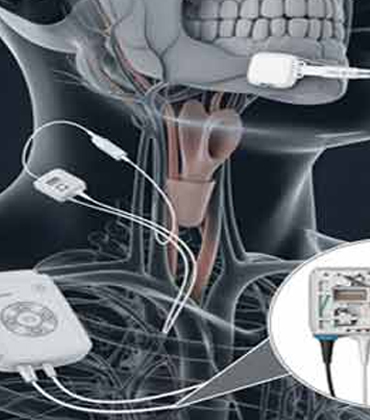
Vagus nerve stimulation (VNS) shows promise for treating neurological disorders like epilepsy and depression. However, surgical risks, costs, and regulatory issues need further research and development of noninvasive methods.
Advanced Therapies Shaping a Pain-Free Future
Top manufacturers are engineering musculoskeletal devices beyond structural support to enhance healing. From smart implants to dynamic stabilization systems, these tools are designed to work harmoniously with the body, supporting recovery while minimizing surgical trauma. Leading VNS systems now offer targeted, programmable therapies that modulate neural pathways associated with chronic pain, inflammation and mental health, ushering in a holistic approach to patient care. The advent of these novel pain management approaches allows clinicians to tailor interventions to each patient’s unique profile.
This edition of Medical Tech Outlook presents expert opinions on pain management, musculoskeletal engineering and VNS therapy and how these disciplines are leading to smarter, safer and more effective care that restores mobility, independence and quality of life.
It features insights from Grace Kao, pain psychologist and associate professor at MD Anderson Cancer Center. She delves into the challenges of integrating behavioral health into pain management and discusses strategies for fostering a patient-centred, multidisciplinary approach to improving care and outcomes.
Jacob R. Hascalovici, division director of pain management, department of neurology at Hackensack Meridian Health, highlights a transformative shift shaping the future of pain medicine. He emphasizes the latest breakthroughs in precision diagnostics and targeted therapeutics, promising more effective and objective pain management.
We hope this edition gives you a wide view of how diverse therapeutic domains like pain modulation, orthopedic devices and neuromodulation are coming together to deliver cohesive, nextgeneration pain management solutions.