Medical Tech Outlook Weekly Brief
Be first to read the latest tech news, Industry Leader's Insights, and CIO interviews of medium and large enterprises exclusively from Medical Tech Outlook
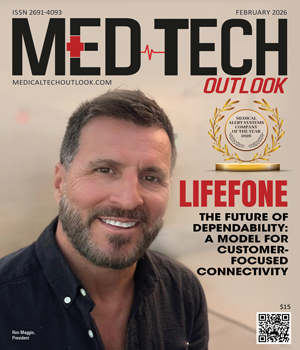
When someone presses a medical alert button, or if a fall is detected, what follows is indicative of the quality of the emergency response. For nearly five decades, LifeFone has used customer-centric guidelines to design its medical alert service, building an emergency response model that follows each situation from first contact through resolution. This is because an alert may begin the conversation, but protection depends on how information is gathered, how judgment is applied and how the response is carried through. It is this sustained approach to response management that underpins LifeFone’s recognition as Med Tech Outlook’s Medical Alert Systems Company of the Year. By treating every alert with human-centered connectivity, the company has redefined what dependable emergency response looks like in practice. “Our value comes from making technology feel personal,” says Ron Maggio, president. “In an emergency, when a subscriber needs help, a real person is there to ensure they are heard, understood and supported. This continuity of human support throughout an emergency is what people rely on when every second counts, and it’s at the heart of LifeFone’s service model.” Its professional emergency care agents are available around the clock, so help is always available when an alert comes in. More importantly, these agents do not follow a one-size-fits-all script. Each subscriber has a personalized care plan on file, which guides agents in assessing the situation and determining the most appropriate next step, whether that involves contacting a family member, coordinating with a physician or dispatching emergency services. The same human oversight applies when an emergency does not announce itself clearly. Daily wellness calls handled by an agent help identify subtle but worrisome breaks in routine. Missed check-ins or unexpected nonresponses trigger follow-up actions, including wellness checks, allowing concerns to be addressed. Care continues even after the initial call is handled. The agents keep the subscriber’s designated care circle (such as family members or caregivers) in the loop with phone calls, text and email updates about any given situation. Keeping everyone on the same page prevents needless panic or escalation while fostering a sense of teamwork and reassurance during a stressful moment.
Is the mole benign or quietly signaling melanoma? Dermatologists answer that question every day. They read every detail on the surface of a mole; its color, symmetry, borders and evolution. But most often, they are working within a gray zone where visual cues cannot fully reveal the underlying biology. Until now, confirmation has relied solely on biopsies. Across the U.S., millions of mole biopsies are performed each year, with many confirming no malignancy. Orlucent was founded to close this diagnostic gap. It developed the Orlucent® Skin Fluorescent Imaging (SFI) System, the first handheld, fluorescent, molecular imaging system that non-invasively evaluates the early tissue remodeling that signals the likely transition to melanoma. It transforms evaluation from subjective guesswork into objective insight, enabling clinicians to understand risk before prescribing a biopsy. “A biopsy shouldn’t be the first step forced by a lack of information. It should be the informed step guided by the right information,” says Dr. Catherine Shachaf, co-founder and co-CEO. For Dr. Shachaf, this mission began with a reality she witnessed repeatedly. A loved one has a phenotype strongly associated with higher melanoma risk. Each time a mole looked even slightly different to the doctor, the pattern repeated—another biopsy, another scar, another stretch of waiting. The physicians were cautious and completely justified each time they proceeded with a biopsy. Most results came back benign. But the relief never offset the dread that preceded it, because there was no way for physicians to understand what was happening inside the mole without removing it. Witnessing that cycle reshaped Shachaf’s view of the problem. As a scientist who had spent her career imaging cancer biology at the molecular level, the limitation was impossible to ignore. The current system simply offered no way to understand biological risk during the exam itself..


Clot extraction (thrombectomy) is a critical procedure for stroke patients, achieving technical success rates above 90 percent. However, while thrombectomy effectively removes the clot, it does not address the underlying damage to the brain tissue caused by one, the disrupted blood flow to the brain (ischemia) from the blockage of the brain artery by the clot and two, the secondary damage caused by reperfusion injury. Reperfusion injury is caused by the sudden inflow of blood following the reopening of a clogged brain artery and is largely an inflammatory response accompanied by oxidative stress that exacerbates brain damage. As a result, less than 20 percent of patients experience a full recovery. Therapeutic hypothermia is a well-known neuroprotective strategy that slows metabolism and reduces cell death through multiple protective mechanisms. Yet, systemic (whole body) cooling in stroke patients is often too slow and carries risks such as shivering, cardiovascular instability, infection, and immune suppression. In fact, it typically takes many hours to reduce body and brain temperatures by a few degrees Celsius—a complex undertaking which is often unsuccessful. These limitations make it impractical as a neuroprotective treatment for stroke. In contrast, selective endovascular brain cooling offers a promising alternative by delivering rapid, targeted hypothermia directly to the affected brain tissue. This method achieves protective brain tissue temperatures within minutes without compromising overall body function or introducing widespread systemic complications. Hybernia Medical is positioning itself at the forefront of this innovative approach. The company has developed a catheter-based system designed to provide localized brain cooling immediately following thrombectomy. This solution works within minutes, cooling the targeted brain tissue directly through a catheter introduced via the same arterial pathway used during clot extraction. “We developed a device that cools the brain directly through a catheter system in a highly selective, precise, and fast manner,” says Jae Choi, co-founder and CEO. The approach is built on years of rigorous research and development, evolving through extensive tests and large-animal studies and building on numerous preclinical stroke experiments that have validated both its safety and feasibility. Early clinical signals suggest that when combined with thrombectomy, localized cooling could lead to significantly improved outcomes. Beyond the cooling mechanism itself, Hybernia Medical’s system is engineered with advanced technology to ensure optimal performance. Embedded sensors provide real-time feedback that allows the device to adjust dynamically to the patient’s anatomical and physiological environment. This intelligent design ensures that the cooling process is not only effective but also consistent and safe. The infusion system that drives the cooling process has been optimized for maximum efficiency by using minimal fluid volumes—down to a fraction of a milliliter—which enhances heat transfer at the tissue level without jeopardizing patient safety or causing systemic instability.
Orthopedic Devices and instruments

Joshua S. Dines, MD, Orthopaedic Surgeon, Hospital for Special Surgery
Biomedical

Laura J. Segovia, MPH, CPM, PMP, PMI-ACP, Sr. Project Manager, Clinical/Lab Information Systems and Operations, and Zoltan Nagymanyoki, Senior Vice President of Science and Innovation,Sonic Healthcare USA
Orthopedic Devices and instruments

Christian Alvarez, Regional Director of Rehabilitation, Hartford HealthCare
Orthopedic Devices and instruments

Brad Johnson, VP, Orthopaedic Destination Service Line and Outpatient Rehabilitation Services, Stanford Health Care
Drug Delivery Solutions

Jeremy Kryszan, Director of IT Security, Parrish Medical Center

Orthopedic Devices and instruments
Jessica Ochis, OTR/L, CHT, Director of Rehabilitation Services, Community Memorial Hospital

Orthopedic Devices and instruments
Dr. Gilbert Tang, Academic Director, Structural Heart Program, Mount Sinai Health System
Handheld fluorescent molecular imaging systems enable real-time, precise clinical visualization, improving surgical accuracy, diagnostics, and patient outcomes through portable innovation.
Raising the Bar for Medical Technology
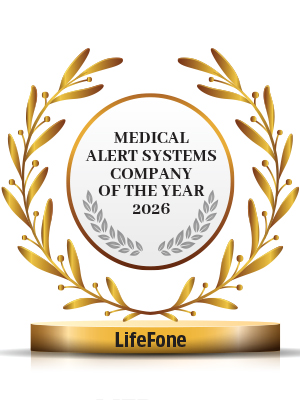
At the center of this issue is LifeFone, recognized as the Medical Alert Systems Company of the Year 2026. For nearly five decades, LifeFone has set a benchmark in personal emergency response by anchoring its technology in human judgment and continuity of care. Its 24/7 professional response agents operate with personalized care plans, ensuring that every alert is assessed in context and carried through to resolution.
Diagnostic progress here is defined by clarity at the point of care. Orlucent is recognized as the Handheld Fluorescent Molecular Imaging System of the Year 2026. Orlucent addresses a longstanding diagnostic challenge in dermatology by introducing non-invasive molecular imaging into routine mole evaluation. Its handheld Skin Fluorescent Imaging System provides objective biological insight, helping clinicians distinguish when monitoring is appropriate and when intervention is warranted.
Sustainable innovation begins with disciplined leadership. Insights from Laura J. Segovia, MPH, CPM, PMP, PMI-ACP, Senior Project Manager, Clinical/Lab Information Systems and Operations, and Zoltan Nagymanyoki, Senior Vice President of Science and Innovation of Sonic Healthcare USA, outline a structured, seven-step framework for healthcare innovation and commercialization that aligns clinical value, regulatory discipline, and stakeholder adoption. Jeremy Kryszan, Director of IT Security at Parrish Medical Center, reinforces that technology strategy in healthcare must ultimately serve patient safety, positioning cybersecurity as a core element of care delivery rather than a standalone function.
Together, these stories underscore that progress in medical technology is defined by clarity, accountability, and purpose. We invite readers to engage with the full features and insights in this issue to explore how focused leadership and practical innovation are shaping the next phase of healthcare delivery.