Medical Tech Outlook Weekly Brief
Be first to read the latest tech news, Industry Leader's Insights, and CIO interviews of medium and large enterprises exclusively from Medical Tech Outlook
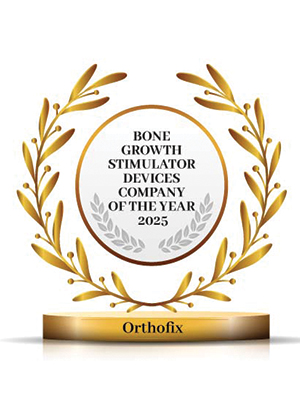
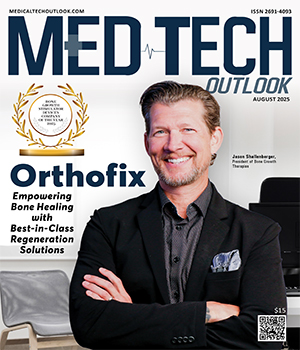
In musculoskeletal medicine, recovery is often the true test of innovation. Healing in spinal fusion or nonunion fracture demands more than just surgical precision—it calls for comprehensive postoperative support. Orthofix is redefining postoperative care with advanced bone growth therapy devices built with surgeons and patients in mind. By blending clinical efficacy with ease of use, the company provides a safe, effective, and non-surgical alternative to overcome bone healing challenges. A customer-first mantra drives every aspect of its operations, from product development to post-delivery care. This approach recognizes the distinct and interconnected needs of both patients and surgeons or prescribing physicians. “We take a white-glove approach to both surgeon and patient satisfaction, and that’s our biggest competitive advantage,” said Jason Shallenberger, president of Orthofix Bone Growth Therapies, who recently celebrated his 20th anniversary with the company. Orthofix’s products focus on two therapeutic modalities in bone growth: spinal fusion and fracture healing. Backed by innovation, its comprehensive clinical portfolio of bone growth therapy stimulators promotes the healing process by delivering pulses of electromagnetic energy to the fusion or injury site, or by stimulating the bone's natural healing process through the use of ultrasound waves. A Holistic Approach to Optimal Recovery Bone healing is a complex biological process influenced by numerous variables. Surgeons closely evaluate the clinical efficacy of any product or device before integrating it into their practice. Orthofix’s bone growth therapy devices are FDA-approved and backed by robust clinical evidence. “Orthofix has the most robust clinical portfolio in the bone growth stimulation space,” said Shallenberger. This scientific rigor gives surgeons confidence in prescribing these devices for improved patient outcomes. Beyond clinical performance, the devices are distinguished by their intuitive design. To guarantee a smooth user experience and encourage consistent use of devices, every product is carefully crafted with patient usability in mind.
What if the answer to chronic idiopathic constipation (CIC) wasn’t another drug, but a smarter way to work with the body’s natural rhythm? That’s exactly what Vibrant Gastro is doing with a first-of-its-kind FDA-cleared vibrating capsule—an innovative, drug-free approach that gently stimulates natural bowel movements from within. Conventional treatments for CIC typically fall into two camps: osmotic agents that draw water into the colon—often triggering unpredictable diarrhea—or stimulant laxatives that forcibly contract the colon muscles, causing discomfort and cramping. Vibrant offers a safer alternative that feels like your body finally remembering how to be at ease. Its technology works in harmony with the body’s internal timing, giving patients more control over their bowel habits, without fear of sudden urgency or social disruption. For physicians, it introduces a clinically validated alternative in a space that has seen little meaningful innovation in over a decade. “It’s a new way of treating CIC,” says Asaf Bar, CEO. “By offering a drug-free solution, we’re giving patients a safer, more natural way to find lasting relief—without the added strain of side effects or medication overload, especially for those managing other chronic conditions.” Activating the Vibrant capsule is a seamless part of the therapy, designed with patient ease in mind. The process begins by placing the capsule on a compact, USB-powered base unit called the pod. Once connected, the pod emits a soft beep and flashes a light for 15 seconds until set up is completed and the light turns solid blue, signaling it’s ready to activate the capsule via radio frequency (RF). Three seconds after the capsule is placed in the pod’s groove, the light turns solid green, confirming the capsule is ready. The patient then swallows it with a full glass of water, typically before bedtime, allowing the therapy to begin working with the body’s natural rhythm the next day. A built-in timer inside the capsule initiates a 14-hour preset delay, allowing it to travel naturally through the digestive tract before reaching the colon. Once there, the capsule begins a programmed sequence of gentle vibrations that stimulate mechanoreceptors—specialized nerve endings in the intestinal wall. These vibrations trigger signals through the enteric nervous system (ENS) to the brain and back, prompting the body’s natural process of contracting and relaxing the colon to move stool, supporting stronger, more coordinated bowel movements. After completing its cycles, the capsule is naturally excreted during a regular bowel movement.


Instead of focusing solely on formulations, Nuon transforms the packaging itself, turning it into an active part of the skincare experience. By integrating 18 years of medtech expertise into cosmetic packaging, the company redefines packaging as a functional tool that elevates product effectiveness and consumer trust. “We enhance the cosmetics, the message of the cosmetics itself, by utilizing our 18 years of medtech development and embedding it into the packaging,” says Alain Dijkstra, CEO of Nuon Medical. Nuon Medical’s journey began with a powerful realization that the cosmetics industry had yet to fully embrace the benefits of medical technology. Over nearly two decades, the company has developed professional and home-use devices, including handheld beauty tools, designed for anti-aging, acne treatment, collagen production, facial rejuvenation, and hair/scalp care. Yet, these devices were often perceived as competitors to traditional creams. This insight led the firm to reimagine the role of packaging. Drawing on its deep knowledge of FDA regulations, efficacy standards, and safety protocols, it began embedding medical-grade technology into what were once disposable items, such as jars, lids, and tubes. The result is a smarter, more sustainable packaging solution that enhances skincare outcomes. For example, while an eye cream may not independently support medical claims, the packaging can. Conventional formulations often rely on harsh chemicals to reduce wrinkles or dark circles. Nuon Medical instead embeds proven technologies, such as EMS, microcurrent, galvanic, or red light therapy, directly into the eye cream tube. Even if the cream itself isn’t FDA-cleared, the device component can carry FDA Class II clearance, enabling substantiated medical claims based on its efficacy.
Jay Weiner, Owner and Executive Director
Most knee rehab devices are limited by design; they are single-leg systems that support either flexion or extension. But recovery requires more than isolated motion. Patients need synchronized, full-range movement to regain mobility and restore function. Yet no existing device offers treatment for both knees, across both motions, in a single unified system. That’s where Full Range Rehab’s EZ Stretch, an overpressure therapy device, stands apart. With a bilateral and bidirectional design, EZ Stretch delivers a full-range rehabilitation experience. It’s a one-of-a-kind device on the market that simultaneously treats both legs while supporting both key motions in a single system. This means clinicians can address two challenges at once, without needing separate equipment. “Our device was developed in close collaboration with orthopedic surgeons and physical therapists, shaped by hands-on clinical insight and built to meet the real needs of patients recovering from surgery or injury,” says Jay Weiner, owner and executive director. Nowhere are those needs more critical than in the early stages of rehab, when every degree of movement matters. At this phase, precision is essential—too little force stalls progress, too much risks re-injury. EZ Stretch addresses that balance with a patient-controlled electric actuator that automatically adjusts to each user’s stiffness and tolerance, delivering a personalized stretch that supports healing without compromising safety. Unlike conventional setups, the device gently distracts the joint during flexion and avoids compression during extension, maintaining anatomically correct movement throughout the recovery process. Combined with high-torque roller pads that deliver more force than any other device on the market, EZ Stretch helps patients break through scar tissue and regain functional range faster. To make the experience easy from day one, a trained service representative visits each patient’s home upon delivery to provide hands-on instruction. Once trained, patients operate the device independently using a simple handheld remote. One button initiates an extension stretch, while another activates flexion. The design eliminates the need for belts, straps or complex adjustments. A T-bar lowers over the thigh with one hand, making the device especially accessible for seniors or patients with arthritis and limited mobility.

Physiotherapy and Pain Management

Scott G. Pritzlaff, MD, Associate Professor, Department of Anesthesiology and Pain Medicine, UC Davis Health
Orthopedic Devices and instruments

Michael Schmidt, Director of Ambulatory Rehabilitation, Duke University Health System
Orthopedic Devices and instruments

Cheryl Grove Cox, Cell Therapy Operations Director, Moffitt Cancer Center
Orthopedic Devices and instruments

Roger Kapoor, Senior Vice President, Beloit Health System
Medical Device Design and Development

Stefanie Hirsch, Chief Sustainability & Quality Officer - Member of the Executive Board, Dräger [ETR: DRW3]

Orthopedic Devices and instruments
Jim Beeman, Senior VP of Sales, Sonic Healthcare USA

Orthopedic Devices and instruments
Dr. Shakyra Moore, Director of Radiology Operations, Temple Health – Temple University Health System
Bone Growth Stimulator devices enhance healing through electrical, ultrasonic, or electromagnetic stimulation. AI integration improves personalization and tracking, addressing challenges in adherence and reimbursement while reducing surgery.
Next-Gen Care: Technologies Driving the Future of Health
Innovations like Over Pressure Therapy devices are redefining pain management by offering non-pharmacologic options that support recovery while reducing reliance on opioids. At the same time, HIV in Vitro Diagnostic Kits is bringing new levels of accuracy, speed, and accessibility to disease detection, particularly vital in underserved communities and global health initiatives.
As the demand for wellness and longevity grows, innovative solutions in skincare technology and gastrointestinal health are also coming to the fore. AI-driven skincare platforms now offer individualized treatment pathways, while new interventions for chronic constipation are improving patient outcomes in a space long underserved by traditional therapies.
One area gaining renewed attention is Bone Growth Stimulator devices. Traditionally reserved for complex or delayed healing cases, these devices are now playing a central role in orthopedic and spinal surgery recovery. By using electromagnetic fields or ultrasound to stimulate natural bone regeneration, they offer non-invasive options that reduce healing time, improve fusion success rates, and minimize the need for revision surgeries.
As surgical volumes increase and patients prioritize quicker recoveries and improved outcomes, bone growth stimulators exemplify the intersection of advanced biomedical engineering and patient-centered care. A leading innovator in this space is Orthofix, which offers clinically proven, non-surgical solutions to support bone healing in challenging cases, such as spine fusion procedures and nonunion fractures.
This edition explores the evolving role of emerging technologies in building a more adaptive, efficient, and patient-centered healthcare ecosystem. It highlights how digital transformation, precision medicine, and sustainable innovation are enabling health systems to meet the complex and growing demands of modern care.
We also feature insights from Dr. Shorin Nemeth, Interventional Pain Specialist at Legacy Health, and Dr. Scott G. Pritzlaff, Clinical Associate Professor at UC Davis Health. Their perspectives illustrate the ways healthcare leaders are balancing clinical effectiveness, innovation, and patient experience.
As medical technology continues to evolve, we hope this edition demonstrates how the medical field is laying the foundation for a future where resilience, equity, and personalized care are no longer aspirational, but operational realities.