Medical Tech Outlook Weekly Brief
Be first to read the latest tech news, Industry Leader's Insights, and CIO interviews of medium and large enterprises exclusively from Medical Tech Outlook

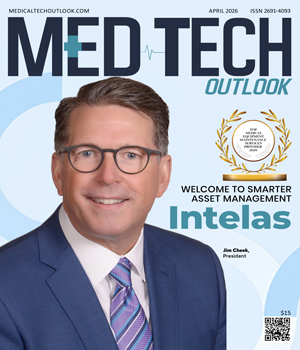
How are health systems modernizing healthcare technology management for distributed care environments? Health systems face increasing pressure to manage more devices across more care settings, often with fewer resources and rising cybersecurity risk. Traditional HTM models have struggled to keep pace, remaining reactive, hospital-centric and constrained by siloed data. Healthcare technology portfolios now span ambulatory centers, imaging suites, hospitals and specialty clinics — creating a distributed oversight challenge. Devices exchange data, connect to networks and require continuous cybersecurity monitoring. Maintaining visibility, performance and protection across this expanding footprint presents a growing operational responsibility for healthcare administrators. For many hospitals and large health systems, the strain is tangible. The focus has moved beyond maintaining equipment to understanding how healthcare technology management strengthens processes, creates labor efficiencies, and supports better asset management across every site. As Compass Healthcare’s signature HTM solution, the team behind Intelas has long delivered an intelligent, data-driven asset management approach that provides real-time visibility, smarter asset planning and proactive service at system scale. Anchored on a connected technology ecosystem, this approach centralizes oversight and improves financial predictability. Administrators gain clear control across care environments, clinicians experience fewer interruptions, downtime declines and capital decisions become more informed and deliberate. Though the scale and sophistication were already in place, the existing identity did not reflect what the work had become or make its value clear to healthcare leaders. The rebrand to Intelas aligned identity with capability — emphasizing the intelligence behind the model. “We bring clarity, connection, and smart decision-making to complicated medical technology environments,” says Jim Cheek, president of Intelas. “We needed a brand that conveyed what we do.”
Why has cybersecurity become a decisive factor in medical device regulatory clearance? For years, medical device manufacturers could get a product through regulatory review with minimal cybersecurity evidence. Cybersecurity mattered, but it often wasn’t the deciding factor in whether a device could enter the market. That has changed. Today in the U.S., cybersecurity is mandated as part of FDA clearance. And globally, regulators are moving in the same direction. If you can’t demonstrate that you’ve designed cybersecurity into the product and validated it with defensible evidence, your submission can get delayed or rejected. When that happens, the impact includes lost revenue, burned runway, frustrated engineering teams, and often, a difficult conversation with investors about why the timeline just moved. Christian Espinosa, Founder and CEO of Blue Goat Cyber, has seen companies get caught off guard by this shift. Sometimes they don’t take cybersecurity seriously until they watch a peer’s submission get rejected for missing or weak cybersecurity content. Other times, they assume it’s mostly about protecting data, and they miss what regulators are really evaluating: patient safety. That’s where Blue Goat Cyber comes in. They treat cybersecurity as regulated infrastructure, and a key determination of whether a device reaches the market and whether clinicians can trust it once it’s deployed. “We’re not looking at cybersecurity as a paperwork exercise,” says Espinosa. “It’s patient safety. If a device can’t be trusted in real clinical workflows, that’s not a technical issue. It’s a patient safety issue.” Cybersecurity Isn’t Just Data Protection Why does medical device cybersecurity extend far beyond protecting sensitive data? One of the biggest misconceptions Espinosa still hears is that medical device cybersecurity is mainly about protecting sensitive data, such as patient health records, protected health information (PHI) and credit card numbers. Data protection matters, but when it comes to medical devices, it’s not the primary lens. If someone can compromise an implanted defibrillator, a drug infusion pump or a surgical robot, the consequence isn’t a data breach. The consequence can be patient harm. That’s why regulators are raising expectations, and why cybersecurity gaps are increasingly tied to recalls, not just compliance findings. The industry is starting to connect those dots, but it’s still not understood as widely as it should be..


What risks exist in trocar port-site closure during minimally invasive surgical procedures? New Wave Endo-Surgical is solving one of minimally invasive surgery’s (MIS) most persistent and under-engineered risks— safe trocar port-site closure from inside the abdomen to prevent long-term complications like hernias and immediate catastrophic injuries. These small incisions, essential for laparoscopic and robotic procedures, are notoriously difficult to seal. Surgeons have to navigate with limited visualization, risking severe injuries like bowel perforations, visceral organ injuries, and vascular damage, issues that often go undetected during the operation especially at the procedure’s end when teams are fatigued. This problem struck a chord with Alexander Gomez, CEO of New Wave Endo-Surgical, whose journey began with a personal invention, a defogging device used in millions of procedures worldwide. After selling that business to Medtronic, Gomez dedicated himself to working with medical professionals with innovative ideas. One such innovator was Dr. Manoj Patel, a passionate urologist who identified flaws in existing closure methods. Tragically, Dr. Patel was diagnosed with leukemia at 48 and passed away within a year, leaving his concept unfinished. Moved by Patel’s vision to prevent patient suffering, Gomez reassembled his team to bring it to life, founding New Wave Endo-Surgical to deliver technologies that improve outcomes, reduce complications, and eliminate unnecessary postoperative opioid use. From Blind Closure to Controlled Closure How does the M-Close Kit improve safety and precision in trocar closure procedures? The flagship product, M-Close Kit, born from Dr. Patel’s insights, is a tube-like device inserted through the port site after trocar removal. It deploys protective wings inside the abdomen, shielding organs from harm. The needles remain concealed throughout, allowing precise fascia penetration on both sides. Gomez emphasizes that this eliminates the trade-off; patients no longer choose between hernia prevention and injury risk. The process is repeatable and efficient, enabling quick suture placement even by trainees. A perfect example is in obese patients, where traditional needles are nearly impossible to control. Bariatric and pediatric surgeons previously struggled, leading to inadequate closures and increased complications. With M-Close, even residents achieve reliable results, including extreme bariatric cases; closures that were once unfeasible now prevent hernias without added risk. .
Advanced mobility solutions are transforming how hospitals manage the demands of healthcare transport. As hospitals face rising patient volumes while working to ensure the safety of both caregivers and patients, innovative systems such as motorized movers and tugs are coming to the forefront. Leading this trend, RIHA Industries is revolutionizing healthcare transport with StaminaLift, its line of battery-powered bed movers and tugs equipped with ergonomic joystick controls. These transport assistants enable effortless movement of patients and equipment, reduce injuries, streamline workflows, and allow nurses to focus more on patient care while improving their own safety “When top-quality medical equipment meets acute healthcare facilities, every caregiver becomes a satisfied user, and each patient feels secure and well cared for,” says Nicolas Ritter, Managing Director. Turning this vision into innovation, RIHA combines advanced technology with a strong commitment to client needs to deliver practical, reliable healthcare mobility solutions. The latest of these is RIHA Industries’ new Jaw System 300, an adaptable attachment for its StaminaLift machines, developed in response to a German hospital’s request for broader functionality. The system enhances wheel compatibility by expanding the range from 125–200 mm to 100–300 mm, enabling seamless connection with hospital beds, wheelchairs, patient chairs, supply bins, and other heavy equipment. Built from high-grade stainless steel, it combines durability with a premium finish, while joystick-controlled, hands-free operation eliminates the need for strapping and bending, reducing strain and workplace injuries. The Jaw System 300 also incorporates software refinements and 3D-printed components, delivering precision-engineered solutions that enhance efficiency and adaptability in healthcare transport. Integrated with flagship models such as the StaminaLift TS5000, this new attachment reinforces RIHA’s position as the leading FDA-approved bed mover manufacturer and strengthens its edge in global markets. Other models in the StaminaLift range are enhanced with various attachments, including integrated battery chargers, lithium batteries, oxygen bottle holders, and extended racks. A notable example is RIHA’s 2100 Bed Mover, which has been upgraded with new control systems, updated software, and Bluetooth connectivity to provide complete hands-free operation.


Known for its therapeutic orthopedic supports like the BandIT forearm brace and the KneedIT knee support, Proband has built a reputation for products that look distinctive and feel custom-made. Each design adapts to the body’s natural shape—whether a forearm, knee or ankle— delivering comfort and targeted relief from pain. This focus on fit is backed by science. ProBand’s products use an approach called anatomically focused dynamic compression, which applies pressure where it’s needed most. The method reduces inflammation at its source, stabilizes joints and helps prevent future musculoskeletal injuries. For more than 35 years, this design-first philosophy has made ProBand one of the most recognized names in physiotherapy products. Trusted by athletes, clinicians and everyday users alike, its orthopedic braces are designed to let people keep moving without compromise. On a fishing trip in Alaska, CEO and President Justin Fareed experienced just how recognizable the brand had become. Two Canadian travelers noticed the unique dual octagonal plates of BandIT forearm brace he was wearing and called it out immediately as a ProBand. One of them, a roofer from Montreal, explained that the Toronto Blue Jays’ trainer had recommended the brace for his carpal tunnel and praised its effectiveness. After trying the KneedIT knee support, he was surprised by how naturally it conformed to his leg and how quickly it brought relief. Many professional athletes have constantly seen the difference. A former offensive tackle for the Miami Dolphins, once sidelined by severe elbow pain, turned to ProBand’s BandIT XM forearm brace. Days later, he was able to incline press 150-pound dumbbells pain-free, a testament to the brand’s ability to blend comfort, anatomical precision and healing in one design. “No two bodies are the same, and the support they require shouldn’t be either,” says Fareed. “That’s why our products are designed to work with the body, shaping to its unique form so people can move, perform and recover painfree.”
In Vitro Diagnostics

Erik Holzwanger, MD, ABOM-D, Director of Endoluminal Surgery and Bariatric Endoscopy; Therapeutic Endoscopist, Tufts Medical Center; Michael Talanian, MD, Advanced Endoscopy Fellow, Tufts Medical Center; Erika Tsuchiyose, BA, MD/MPH Student, Tufts University School of Medicine
Endoscopy

Joseph Ingrassia, Interventional Cardiologist, Director Vascular Medicine & Endovascular Intervention, Hartford Hospital
Medical Device Design and Development

Eric Huang, Engineering Manager, Alcon
Drug Delivery Solutions

Jeremy Kryszan, Director of IT Security, Parrish Medical Center
Medical Equipment

David Kelly, Chief of Ambulatory Operations and VP Revenue Cycle, Mary Rutan Health

Electric Wheelchairs
Stacey Lyons, Director of Quality of Biomerics

In Vitro Diagnostics
Hernando Garrido, Director of Manufacturing Engineering, Fresenius Medical Care North America
Regulatory mandates, connected healthcare growth, AI-driven threats, and secure-by-design innovation are accelerating global medical device cybersecurity investment.
Medical equipment maintenance services sustain healthcare reliability by ensuring device safety, operational efficiency, regulatory compliance, and long-term performance of critical clinical technologies.
Redefining MedTech through Reliability and Precision
Our cover story, Intelas, recognized as the Top Medical Equipment Maintenance Services Provider 2026, reflects a shift from traditional HTM to an intelligence-led ecosystem. By centralizing asset visibility and integrating proactive service, cybersecurity monitoring, and AI-driven analytics, it reduces downtime, improves utilization, and strengthens financial predictability. Maintenance, in this model, becomes a lever for clinical continuity and operational control.
Blue Goat Cyber, recognized as the Medical Device Cybersecurity Solution of the Year 2026, addresses cybersecurity as a regulatory and safety requirement. Its lifecycle-based model, from design through post-market monitoring, removes uncertainty in submissions while ensuring devices remain secure in real-world use. This positions cybersecurity as core infrastructure tied directly to safety and clearance outcomes.
New Wave Endo-Surgical, recognized as the Top Endoscopic and Robotic Surgeries Technology 2026, focuses on safe port-site closure in minimally invasive surgery. Its M-Close system replaces blind techniques with a controlled, repeatable process that protects internal organs and enables precise suturing. By integrating deep-tissue anesthetic delivery, it also reduces postoperative pain and opioid reliance, elevating closure to a critical outcome driver.
Leaders’ perspectives in this issue reinforce the operational depth behind these shifts. Dino Scanio, MPH, Doctoral Candidate, Multiservice Hospital Director at Driscoll Children’s Hospital, outlines the need to balance efficiency with the complexities of chronic care through targeted operational models and care coordination. Eric Huang, Engineering Manager at Alcon, emphasizes structured, data-driven decision-making and collaborative engineering as essential to delivering safe, manufacturable medical devices at scale.
Together, these perspectives underscore a clear direction: MedTech leadership now depends on integrating technology, process discipline, and accountability. We invite readers to explore how the organizations featured in this edition demonstrate that integration translates into measurable outcomes.