Medical Tech Outlook Weekly Brief
Be first to read the latest tech news, Industry Leader's Insights, and CIO interviews of medium and large enterprises exclusively from Medical Tech Outlook
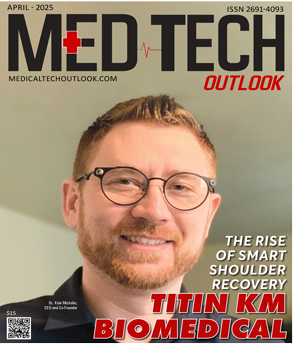
Titin KM Biomedical was born from experience—hard-earned and painful. Dr. Kole Mickolio, a former Division I pitcher, saw his career end abruptly due to a devasting injury. He wasn’t alone. His brother, a Major League Baseball pitcher, and their Chief Medical Officer, a former catcher, had all suffered the same fate—watching careers with immense potential unravel due to shoulder injuries. Later in the early 2010s, they realized just how common shoulder injuries were in derailing promising sports careers. Despite advances in analytics and technology, rehabilitation methods remained outdated—dumbbells, resistance bands, and even soup cans were still the norm. These tools failed to provide the dynamic resistance needed for recovery. Dumbbells rely solely on gravity, misaligning with the joint’s natural movement patterns, while resistance bands, though variable, lack precision and consistency, leading to improper loading. This stark disconnect between technological progress and stagnant rehabilitation methods highlighted a clear gap: traditional tools were not equipped to address the complex needs of shoulder recovery. But as young athletes with no engineering or medical background, and hailing from a small town in Montana, the team lacked the expertise to create a solution. However, when a spinal injury ended Mickolio’s baseball dreams, he pursued biomedical engineering at the University of Utah to develop better shoulder rehabilitation. His journey deepened after a severe ischemic stroke in his late twenties, leading him to study radiology at Dartmouth while maintaining his passion for biomechanics. After passing his first medical board exam, he founded Titin KM Biomedical, merging his personal experiences and engineering expertise to revolutionize sports rehabilitation. Today, the company has grown into a force, developing state-of-the-art rehabilitation technology to help athletes and patients recover and perform at their best. The device itself is a marvel of engineering—mobile, ambidextrous, and designed to provide high resistance across all ranges of motion. Achieving this level of versatility was no small feat, but it has redefined what’s possible in shoulder rehabilitation. “Our goal is to give clinicians better tools, help athletes recover faster, and ensure patients stay on track—because it’s about them, not just the business,” says Mickolio. The Device That’s Changing the Game Titin KM Biomedical’s flagship and patented device, Humero Tech C1, is a groundbreaking innovation combining mechanical ingenuity with smart software integration. Unlike traditional rehabilitation equipment—pulleys, dumbbells, and resistance bands—the device specifically targets the shoulder complex to ensure that every motion and force is accurately focused on the joint’s recovery. The device’s design optimizes body positioning to isolate the shoulder and provide precise, omnidirectional resistance—a novel feature in the medical space. This ensures rehabilitation movements are biomechanically sound and prevents unnecessary strain on surrounding muscles and joints.
When Jill, a former travel director, was told she might never regain her mobility after an injury, she feared her days of exploring new places were behind her. Then she discovered the VOCIC D71 mobility scooter—a sleek, thoughtfully designed solution that not only met her needs but exceeded them. On her first trip to New York City with the scooter, Jill marveled at how it allowed her to navigate busy streets and iconic landmarks with ease. For VOCIC, Jill’s story is more than just a testimonial—it embodies their purpose. Over the past decade, VOCIC, under its parent company MATESIDE GLOBAL US INC., has redefined the mobility aids industry, creating products that combine cutting-edge engineering with a deep understanding of users’ challenges. Whether it’s a rollator designed for ergonomic comfort or an electric raised toilet seat built for safety and independence, VOCIC’s mission is clear: to empower individuals to reclaim their freedom and live life on their own terms. At the core of VOCIC’s philosophy is a commitment to providing independence and comfort for individuals with physical challenges. Every product begins with extensive research to ensure it meets real-world needs. VOCIC engineers spend months gathering insights from users, medical experts, and caregivers to develop designs that are not only functional but truly transformative. Take the Z21 Rollator Walker, for example. When VOCIC entered the crowded rollator market, it noticed a glaring gap—existing models were either outdated or uncomfortable. In response, the team designed an innovative arc-shaped seat cushion made of PU foam that adapts to the user’s body, providing unparalleled comfort. The walker also features adjustable handlebars, making it a versatile solution for users of varying heights. VOCIC doesn’t stop at mobility aids; it is also redefining home rehabilitation with products like the AX12 Electric Raised Toilet Seat. This device gently and ergonomically lifts users, reducing strain and the risk of falls.
The ability to move freely shapes how individuals experience life. When mobility becomes a challenge, everyday life can feel limiting. Harmar’s thoughtfully designed lifts and ramp solutions restore freedom for aging adults, veterans and individuals with disabilities, ensuring they can move through their world without barriers. At the core of Harmar’s mission is the belief that mobility should enable, not restrict, a fulfilling life. A leader in mobility and accessibility solutions, Harmar empowers people to live with confidence and dignity. An extensive product range helps individuals overcome physical challenges while enhancing comfort, convenience and overall well-being. Whether at home or on the go, every solution is engineered for ease of use and seamless integration into everyday life. The Stairlift product line provides a secure way to navigate multi-level homes. The moving chair travels on a narrow track attached directly to the steps, providing a safe ride. It is available in straight and curved configurations to enable smooth, reliable movement between floors. Vertical platform lifts (VPL) accommodate wheelchairs and mobility devices, making elevated spaces like porches and decks accessible. Much like an elevator, a VPL can transport a scooter, power chair or wheelchair vertically from as little as two feet to as much as 14 feet. The compact and efficient alternative to traditional mobility solutions is ideal for indoor and outdoor use. Durable threshold ramps, available in rubber or aluminum, enhance mobility without requiring complex installation. Bringing mobility beyond the home, vehicle lifts make transportation of wheelchairs, power chairs and scooters simple and stress-free. Compatible with sedans, SUVs, minivans and trucks, they empower individuals to travel with ease. Customers can connect the lift to their vehicle’s battery via a wire harness or use an optional rechargeable battery pack for power for convenience and reliability. Built to the highest safety standards, each lift ensures long-lasting performance and dependability. The commitment to quality extends beyond product design. Each lift undergoes rigorous testing, including load-bearing and life-cycle evaluations exceeding industry standards. Outdoor lifts are built to withstand long-term exposure to the elements. Some models include remote hand controls, which should be stored indoors when not in use to maintain functionality. Whether it’s a stairlift, ramp or vehicle lift, customers can trust Harmar’s solutions to provide lasting mobility support for years.
ENT Devices

Ian Jasenof, Director of Strategic FQHC Partnership, Mile Square Health Center-UI Health
Medical Equipment

Corbin Hedt, PT, DPT, SCS, Senior Physical Therapist, Upper Extremity Athlete Fellowship Director, Houston Methodist
Orthopedic Devices and instruments

Greg Jamison, MSN, RN, Director of Nursing, Mixed Acuity, Orthopedics, Neuro, Oncology, and Float Pool, UofL Health
Orthopedic Devices and instruments

Michael Schmidt, Director of Ambulatory Rehabilitation, Duke University Health System
Orthopedic Devices and instruments

Jessica Ochis, OTR/L, CHT, Director of Rehabilitation Services, Community Memorial Hospital

Orthopedic Devices and instruments
Christian Alvarez, Regional Director of Rehabilitation, Hartford HealthCare

Surgical Devices and Instruments
Christopher Joseph, Director of Physical Therapy, Kennedy Krieger Institute
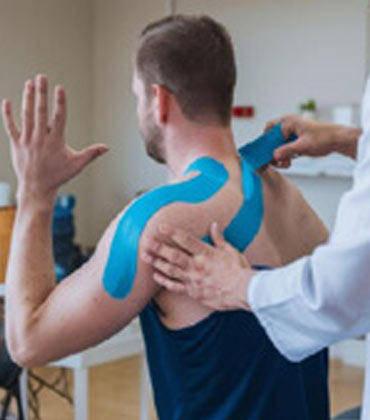
Shoulder rehabilitation technology is critical in meeting the increased need for effective and rapid recovery options for shoulder injuries, surgeries, or chronic illnesses.
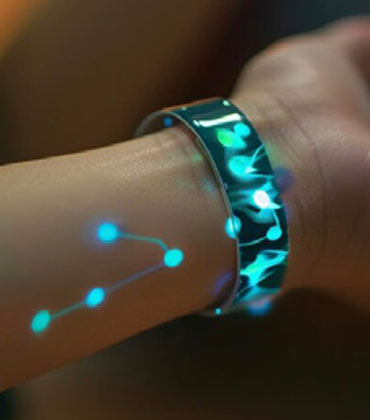
Smart wearable mobility aids involve technology, sympathy, and creativity, changing the status of assistive technology from a purely functional necessity into empowerment tools.
Innovations Reshaping Mobility and Recovery
One area making remarkable strides is mobility aids. Modern mobility solutions are no longer just assistive devices; they integrate artificial intelligence, biomechanics and IoT connectivity to enhance movement. Smart prosthetics adapt in real time, powered exoskeletons assist those with limited mobility, and sensor-driven wheelchairs are reshaping accessibility. These breakthroughs are not just restoring mobility—they’re restoring quality of life.
As medical technology continues to push boundaries, the fusion of healthcare and technology is unlocking new levels of patient empowerment. In this edition, MedTech Outlook explores the latest advancements in mobility aids and beyond, spotlighting the innovators shaping a future where movement, recovery and independence are redefined.
We feature thought leadership from industry experts driving progress in medical technology. Corbin Hedt, PT, DPT, SCS, Senior Physical Therapist, Upper Extremity Athlete Fellowship Director, Houston Methodist, highlights the critical role of skilled physical therapy in optimizing post-operative recovery—enhancing strength, mobility and function while reducing pain and complications. Through evidence-based care, hands-on techniques and personalized exercise programs, physical therapists guide patients safely through rehabilitation, ensuring a full return to activity. Meanwhile, Christopher Joseph, Director of Physical Therapy at Kennedy Krieger Institute, explores the impact of community partnerships in pediatric rehabilitation. By fostering collaboration, engaging staff and ensuring accessibility, organizations can create meaningful opportunities beyond traditional therapy, improving patient outcomes and strengthening community support networks.
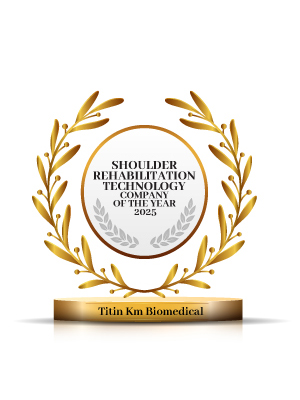
Additionally, we showcase Top Mobility Aids Provider 2025 and Shoulder Rehabilitation Technology Company of the Year 2025, highlighting cutting-edge solutions designed to enhance recovery, restore function and improve patient mobility.
As the MedTech industry evolves, the convergence of innovation and engineering redefines what’s possible in modern healthcare. We hope this edition inspires further exploration into the potential of MedTech. Let us know your thoughts!