Medical Tech Outlook Weekly Brief
Be first to read the latest tech news, Industry Leader's Insights, and CIO interviews of medium and large enterprises exclusively from Medical Tech Outlook
A featured contribution from Leadership Perspectives: a curated forum reserved for leaders nominated by our subscribers and vetted by our MedTech Outlook Advisory Board.

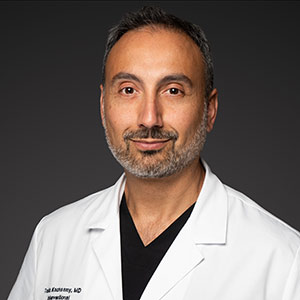
Dr. Toufic Kachaamy is the Chief of Medicine at City of Hope Phoenix and an advanced therapeutic endoscopist specializing in gastrointestinal cancers. He is recognized for innovation in endoscopic oncology, holding leadership roles in medical societies, and advancing patient care through research and patented medical devices.
In an exclusive interview with MedTech Outlook, he shared invaluable insights on how innovation, adaptability, and precision are reshaping the future of medical technology and patient care.
AI at the Frontlines of Care
Artificial intelligence (AI) is rapidly reshaping healthcare. From radiology to dermatology, cardiology to oncology, algorithms are being introduced to enhance diagnosis, streamline workflows, and improve patient outcomes. Few areas illustrate both the promise and the challenges of AI better than gastroenterology, where AI-assisted colonoscopy for polyp detection has become a test case for human machine collaboration.
Colorectal cancer prevention hinges on early detection and removal of precancerous polyps. AI-powered computer-aided detection (CADe) systems now act as a real-time “expert second pair of eyes” during colonoscopy, highlighting suspicious lesions for the endoscopist. Clinical trials have shown these tools can significantly raise adenoma detection rates (ADR), a critical quality metric linked to reduced cancer risk. The promise is that AI never fatigues, has a reliable and consistent performance and can scan the entire screen with the same speed while human vision is only sharp at a narrow angle, fatigues, is subject to distraction and most importantly is not always up to the “expert levels”. Real word evidence however told a different story; some practices saw benefits while others saw the opposite.
The Human Factor: Trust, Vigilance, and Outcomes
AI only works when people know how to use it effectively. Early experience in gastroenterology reveals a delicate balance between automation bias and algorithmic aversion.
• Automation bias occurs when clinicians trust the AI too much, allowing their own vigilance to slip. Eye-tracking studies in colonoscopy have shown that doctors sometimes scan less carefully when AI is active, assuming “the system will catch everything.”
• Algorithmic aversion happens when clinicians reject AI either from the beginning by refusing to turn it one or after a few false positives, dismissing alerts that could in fact represent real lesions.
“AI is not a replacement for physicians but a vigilant copilot, its real power lies in augmenting human judgment, sustaining vigilance, and improving patient outcomes”
Both extremes undermine outcomes, and most healthcare providers fall somewhere between these extremes. They may also behave differently in different situations and in responses to different AI algorithms. The sweet spot is calibrated trust: clinicians should treat AI like a tool or an assistant whose alerts deserve attention, but whose input always requires verification. Moreover, our interactions with Machines and Algorithms are not static and actually change over time. They could also lead to changes in our skills especially those that require constant training to maintain. Very little research is done today on the longitudinal impact of the Human-Machine collaboration. A recent Lancet Gastroenterology & Hepatology study found that when doctors accustomed to AI performed colonoscopies without it, their detection rates fell by 20%. This first evidence of AI-related skill deterioration is a wakeup call for gastroenterologist and beyond. Today, the way research is done is often a snapshot of outcomes after an intervention. Our skills and outcomes however are dynamic and change with time. Athletes continuously train to maintain high performance, our cognitive skills are not different. We are barely starting to understand the short-term impact of AI on our performance and skills, let alone the changes that occur after an upgrade, a modification of the algorithm or the long term impact on our skills, outcomes and our patients.
Emotionality and Anthropomorphism
Research by Kate Darling on human–robot interaction shows that people naturally anthropomorphize technology, projecting human-like qualities onto machines. Gastroenterologists vary in their description of polyp-detection AI. Some think of it as an “invisible assistant” while others as “my future replacement”. How they perceive AI can determine how they used it or whether they use it at all. Just like other areas in life, emotions can be more powerful that rationality or data.
The right framing can make adoption easier and more helpful. If the alerts feel like a nudge from a teammate and are not threatening. The wrong framing can create risks if clinicians begin to defer responsibility to the machine or worse if the physician is threatened by the machine. In the relatively short 4 years since the FDA approval of the first AI machine for polyp detection we have learned that AI can help, can be counterproductive, it can improve skills and improve outcome, yet it can worsen skills and outcomes, or make no difference at all. What we really learned is that human machine collaboration is very complex and simple conclusions, risk missing the whole picture and delaying progress. What we learned the most is that AI has opened new possibilities in healthcare, yet the research is just beginning. Making any real conclusions today is premature. What we need is cleverly crafted research on human-machine collaboration to understand how AI can augment human intelligence and performance leading to sustained improvement in patient outcomes. This research should take into consideration design, delivery of the AI output, human emotions, impact on human behavior in addition to patient outcomes.
The Bigger Picture: AI Across Healthcare
The adoption of AI for polyp detection highlights a broader truth for healthcare: technical performance is only part of the story. Design with human in mind, training, perception management, outcome optimization and long-term skill enhancement are likely to be essential for long term success thought-out healthcare. These issues are not unique to gastroenterology, they apply to radiology, pathology, cardiology, and every specialty exploring AI.
Conclusion: Augmentation, Not Automation
The case of AI in polyp detection offers a valuable microcosm for healthcare. AI can help us work faster, reduce variability and improve patient outcomes, but its real-world success depends on the human–machine partnership. The path forward is clear: Humans should use AI to augment, not replace their skills. Clinicians must remain “pilots in command,” with AI serving as a vigilant co-pilot. If healthcare learns from gastroenterology’s experience, the future could be one where technology enhances, not diminishes the art of medicine. The opportunities are endless for intelligence augmentation. The right type of research, however, is as dynamic as AI itself and requires more collaboration among many stakeholders including computer scientists, physiologists and psychologists.