Medical Tech Outlook Weekly Brief
Be first to read the latest tech news, Industry Leader's Insights, and CIO interviews of medium and large enterprises exclusively from Medical Tech Outlook
A featured contribution from Leadership Perspectives: a curated forum reserved for leaders nominated by our subscribers and vetted by our MedTech Outlook Advisory Board.

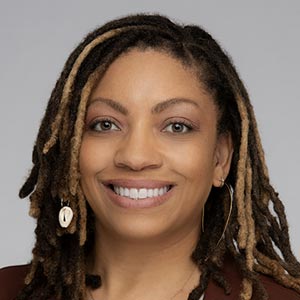
As the Director of Imaging and Vision Services at Waianae Coast Comprehensive Health Center, Safinia Chavis brings 20 years of clinical and leadership experience to advancing patient-centered care. She blends technical radiology expertise with strategic oversight to strengthen operations, empower teams and elevate healthcare delivery standards.
In an exclusive interview with MedTech Outlook, Chavis shared insights into her professional journey and how she advances access, cultural responsiveness and collaborative leadership within a federally qualified health center serving underserved communities.
Career Journey and Core Responsibilities
I began my imaging career 20 years ago as an X-ray technologist, trained in Colorado. I worked across Level 1 trauma centers, for-profit hospitals and outpatient clinics, and later a rural mountain urgent care. In that setting, I was exposed to high-altitude medical practice and ortho care while also serving as a medical assistant and lab technician, managing sterilization and supply management, and supporting insurance and prior authorizations tasks. Wearing multiple hats gave me a broad understanding of healthcare beyond a single modality.
After moving to Hawaii, I worked at a military teaching hospital, collaborating with radiologist residents and X-ray students. That taught me different approaches to patient care and system design. After obtaining my master’s in healthcare administration, I transitioned into an administrative role at Waianae Coast Comprehensive Health Center, bringing my clinical foundation to expand into broader leadership.
In radiology, I lead from deep technical experience across modalities and levels of responsibility. In vision services, my role is different. I am not an optometrist, so my focus is on supporting the team, removing operational barriers and creating the space for them to deliver high-quality care. Rather than positioning myself as the primary problem-solver, I intentionally widen the space for solutions to originate from the team itself. Moving between these two roles reinforced my belief that leadership is about creating space for others to succeed.
Expanding Access in Underserved Communities
Serving Native Hawaiian and Pacific Islander communities on the west coast of Oahu requires cultural humility and intentional listening. I emphasize person-centered, trauma-informed care rooted in dignity and respect. Patients bring valuable insight into their own care and when efficiency conflicts with cultural alignment, I refocus on outcomes rather than rigid workflows. There are often multiple culturally appropriate paths to achieving strong health outcomes. Blending best practices with cultural understanding strengthens trust and reinforces our commitment to the community.
As a federally qualified health center on the west coast of Oahu, we also face practical access barriers, including transportation, cost and language. I prioritize structured one-on-ones and open dialogue with frontline staff who hear these concerns daily, encouraging them to identify the barriers they see and to think proactively about solutions. I am intentional about not assuming that solutions should originate at the leadership level; instead, I create space for frontline teams to identify both the challenges and the most practical responses.
“My big strategy is listening and creating space for those conversations and solutions to come forth from my team.”
Rather than assuming answers must originate from only high leadership levels, I widen the space for insight to come from those closest to the work. From there, I collaborate with executive leadership to move initiatives forward, reducing barriers and expanding access.
Strategic Prioritization and Human-Centered Leadership
As a federally qualified health center, we face fiscal challenges, particularly as questions arise about future federal funding. Every investment must balance patient impact, financial sustainability and long-term access to care. I value being data-informed, not just data-driven. We review measurable outcomes, financial sustainability and gather staff and patient feedback. What seems like an obvious priority may not always create the greatest patient impact. Effective prioritization requires balancing data, best practices and lived experience. Though it takes time, this approach keeps decisions aligned with mission and measurable outcomes.
Collaboration runs through everything I do. As a director, I sit at the nexus of communication between frontline staff and executive leadership, translating vision into operational practice. I advocate for my teams while continuously asking patients whether our efforts are working and how we can improve. Building that culture requires consistency and intentional communication, but when collaboration becomes part of the infrastructure, it creates shared ownership and strengthens patient outcomes.
My advice to healthcare leaders would be to create space and listen to your teams. I firmly believe that the best patient experience flows from a staff that feels genuinely supported and heard by its leadership. When teams feel valued, they become solution-minded and proactive in addressing barriers before they escalate.
Beyond creating space, I encourage leaders to approach teams and challenges with curiosity rather than judgment. I intentionally ask questions that build trust and open new perspectives, helping me understand circumstances more clearly and strengthen problem-solving. In one meeting, a staff member laughed and said, “If I were Safinia, I would now ask, ‘Can you tell me more about that?’” That moment told me curiosity had become part of our culture.
Alongside curiosity, I encourage leaders to maintain a high value for the humanity of both staff and patients. It is easy to become absorbed in metrics, meetings and initiatives. But we must continually ask what those efforts mean for each patient walking through the door and each staff member clocking in and out. When we hold onto that human focus, we build environments where staff feel valued and patients receive the care they deserve.