Medical Tech Outlook Weekly Brief
Be first to read the latest tech news, Industry Leader's Insights, and CIO interviews of medium and large enterprises exclusively from Medical Tech Outlook
A featured contribution from Leadership Perspectives: a curated forum reserved for leaders nominated by our subscribers and vetted by our MedTech Outlook Advisory Board.

Redefining Surgical Training for Safety, Scale, and Specialisation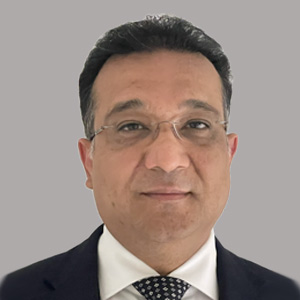
Jay Chatterjee
Modern surgical training has evolved with an emphasis on staged progression: beginning with foundational exposure as a medical student, then honing the interest developed during this time into surgical skills during residency and speciality training. The culmination of this journey for a few highly ambitious and skilled surgeons is super-speciality or subspeciality training in a very specific surgical field. The current model of surgical care relies primarily on a combination of specialist and sub-specialist surgeons to meet the heightened demand for complex surgical practice.
Surgical training remains one of the most demanding and structured forms of professional education. It requires integrating technical skills, clinical judgment, ethical awareness and emotional resilience. Medicine has a rich history of passing on generational skills and knowledge through training and mentoring. Surgical trainers and mentors play a pivotal role in shaping not only a competent surgeon but also a safe practitioner and a future healthcare leader.
The modern-day surgical training algorithm heavily relies on simulation as a key component. Skills labs, virtual reality platforms, and cadaveric workshops allow trainees to practice techniques in a risk-free environment before applying them in a real clinical setting. However, simulation on its own cannot replace the human element in surgical training, where the surgical trainer and mentor take on an invaluable role. Surgical trainees progress from observation to supervised practice and ultimately to independent operating in a very structured way, keeping patient safety as the foremost priority.
Building Precision Through Structured Teaching and Mentorship
A surgical trainer is responsible for teaching operative skills, clinical reasoning and setting and upholding professional standards. A good trainer breaks complex tasks into teachable components, tailors instruction to the trainee’s level, and ensures patient safety at all times. Effective trainers promote graded responsibility, allowing trainees to take on greater independence as their competence grows. Offering specific, timely and actionable insights rather than vague criticism helps in improving trainee performance and learning. Patient safety must be ensured at all times during training by balancing educational opportunities with the ethical obligation to deliver optimal care. Promoting an environment of learning by encouraging excellent communication skills, teamwork and making ethical decisionmaking routine in everyday practice are important principles of surgical education.
A skilled surgical trainer understands that teaching surgery is dynamic. In the operating theatre, trainers need to make rapid decisions about when to intervene and when to step back, allowing the trainee to learn through experience without affecting patient outcomes. Surgical training is not merely the transfer of technical skills, but the formation of a professional identity.
Simulation as the Foundation of Modern Surgical Learning
The present-day surgical trainee spends a significant proportion of their initial formative training using simulation, in which virtual environments replicate real-life clinical scenarios. These range from simple bench models (e.g., suturing) to highly sophisticated learning models involving virtual reality and full-scale functional operating theatre simulations. Simulation has become the cornerstone of modern surgical training by transforming how technical and clinical decision-making are taught and assessed.
As healthcare systems place increasing emphasis on patient safety, efficiency and competency-based education, simulation provides a controlled, reproducible and risk-free environment for learning. One of the significant advantages of simulation is the ability to practice technical skills repeatedly with no risks to patients. Trainees use simulation to improve skills like hand-eye coordination, depth perception (especially in minimal access surgery), tissue and instrument handling and procedural sequencing. This is unlike traditional apprenticeship models, as it allows focused, repetitive training with immediate feedback.
Navigating the Transition from Theory to Real-World Practice
The most important part of the learning curve as trainees transition from theory to real-world procedures is the ability to handle the unpredictability of anatomical variations in a diseased surgical landscape. Developing manual dexterity can be challenging as fine motor skills take time to develop and vary widely among trainees. Limited operative exposure creates competition among peers to perform surgical procedures, and reduced working hours can restrict handson experience. Surgical trainees often work long, extended hours, even over weekends, creating strain on work-life balance and affecting mental and physical well-being. Female trainees can be disproportionately affected by the demands of surgical training, as societal expectations can place unrealistic pressure on them.
The rigours of modern medical training, with an emphasis on documentation and non-clinical tasks, further reduce the time available for training. Cognitive and learning challenges make trainees deal with a steep learning curve, where decision-making under pressure and knowledge overload can become burdensome and lead to poor performance. Variation in training quality, including inconsistent supervision, assessment pressures and feedback gaps, can all adversely affect surgical learning. There needs to be a balance between delivering clinical services, prioritising training needs and promoting learning opportunities. Traditional hierarchical culture in surgery needs to be replaced with open communication and questioning. Surgical trainers and mentors need to be mindful that their surgical legacy is not only based on patient outcomes, but also on the trainees they guide as they transition into independent surgical consultant colleagues and surgical leaders.
Defining the Next Generation of Surgical Leadership
Patients and healthcare systems increasingly expect better communication skills, shared decision-making, and transparency of outcomes. The new generation of surgeons needs to increasingly understand the use of high-fidelity simulation to enhance their surgical performance, with greater integration of artificial intelligence into mainstream surgical platforms. Understanding the need to develop mechanisms of resilience to address emotional exhaustion through a balanced work-life environment would go a long way toward preserving surgical longevity. The role of the surgical clinician has expanded to blend the requirements of being a surgical expert, a technologist, a brilliant communicator and team player, a system thinker, an innovator and a collaborator.