Medical Tech Outlook Weekly Brief
Be first to read the latest tech news, Industry Leader's Insights, and CIO interviews of medium and large enterprises exclusively from Medical Tech Outlook
A featured contribution from Leadership Perspectives: a curated forum reserved for leaders nominated by our subscribers and vetted by our MedTech Outlook Advisory Board.

Dr. Simon Blanc, M.D., 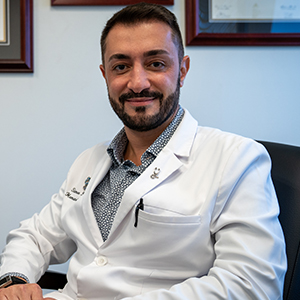
Dr. Simon Blanc
We asked Dr. Blanc to reflect on how digital health and clinical innovation intersect with the human work of cancer care.
Keeping Technology Human
For me, it starts with a simple question: Does this tool give me more time and better information to spend with my patient or does it simply put another screen between us? Technology should shorten the distance between detection and decision-making—not the distance between doctor and patient.
When Broward Health brought in the Intuitive ION Robotic Bronchoscopy System, the goal was to make care more efficient and precise. In select cases, it allows us to biopsy a suspicious nodule, receive a pathology diagnosis and proceed directly to surgical removal, sometimes while the patient is still under anesthesia. Patients can wake up knowing that a significant part of their diagnostic and treatment journey has already been completed.
That’s what technology should do: support the physician-patient relationship, improve care and make an incredibly difficult experience a little easier for the patient.
Adopting Innovation with Purpose
Three things have to be true before we adopt something new: it has to improve accuracy or outcomes, it has to fit into a workflow our teams can actually sustain and it has to be something I'd want used on a family member. We've applied that lens across the board, from advanced imaging platforms like the Canon Alphenix Sky Plus system with the HD76 detector that improve interventional oncology precision and range of motion, to surgical systems with force feedback and enhanced 3D visualization like the da Vinci 5 Surgical System that let surgeons operate with more control over long cases. None of it matters if it doesn't translate into a better, safer experience at the bedside.
Connecting Research with Earlier Access to Care
Research gives us the evidence; innovation gives us the delivery mechanism. A clinical trial can prove a therapy works, but digital tools are often what get the right patient matched to the right trial or treatment sooner. Broward Health maintains an active portfolio of clinical trials specifically because access to investigational therapy shouldn't depend on which zip code a patient lives in. Pair that with emerging AI-assisted screening for earlier breast cancer detection and you start closing the gap between “we know this works” and “this patient benefited from it.”
" Technology should shorten the distance between detection and decision-making, not the distance between doctor and patient. "
Making Cancer Care Move at the Pace Patients Need
The opportunity is speed without sacrificing thoroughness. We've restructured programs so a patient can move from detection to biopsy to surgery in a single day rather than the national average of roughly six months. That kind of compression used to be unthinkable. Speed and empathy go hand in hand when care is designed with intention. By bringing multidisciplinary teams together in parallel, we give patients the pace they need and the attention they deserve, supported at every step, rather than navigating referrals on their own.
Leading Innovation from the Patient's Perspective
Stay close to your patients. Before embracing a new piece of technology or platform, take the time to see how it actually affects the person sitting in front of you. Ask yourself: Does this make their care easier, more compassionate or more effective?
I’d also remind younger colleagues that innovation isn’t always about the newest technology. Sometimes, it’s about making care more connected, a same-day multidisciplinary visit, a well-coordinated tumor board or simply making sure a patient doesn’t have to navigate the system alone.
At the end of the day, innovation should come back to one question: Did we make this experience better for the patient and their family during one of the hardest times in their lives? If the answer is yes, that’s innovation that truly matters.