Medical Tech Outlook Weekly Brief
Be first to read the latest tech news, Industry Leader's Insights, and CIO interviews of medium and large enterprises exclusively from Medical Tech Outlook

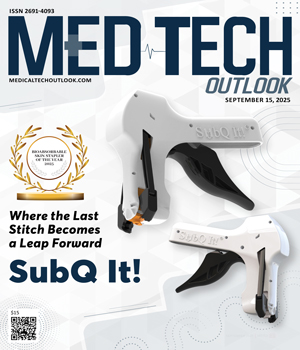
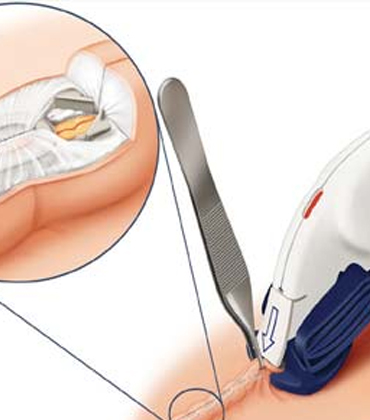
Recently, in a New England hospital, as a surgical team completed a lengthy procedure, the lead surgeon prepared to close the incision - not with metal staples or traditional sutures, but with a compact, next-generation device. She picked up a stapler that, instead of metal, inserted a series of nearly invisible, FDA-approved, bioabsorbable polymer bridges to secure the skin edges. The wound was closed quickly and securely, with no metal clips that would need removal and leave visible tracks. This quiet shift marked one of the most significant advances in wound closure in more than half a century. A breakthrough embodied by SubQ It!, the flagship innovation from Opus KSD, a U.S.-based medical device company determined to rewrite one of surgery’s oldest scripts. Rewriting the Playbook for Surgical Closure This story is rooted in a problem all too familiar to surgeons – a forced choice between closure appearance and efficiency/ time savings. For decades surgeons have known that the best cosmetic result is achieved by time-consuming, highly skilled placement of manual “stitches” beneath the skin using bioabsorbable suture material. But in this age of cost control, time is money and metal staples, which save time and provide a secure closure, are all too often the default solution. Patients with metal-stapled incisions must endure the painful removal of staples without anesthesia, a process few remember fondly. Beyond the physical pain, the piercings made by the metal staples leave “railroad track” visible reminders that can cause ongoing distress, diminished self-esteem, or even social withdrawal. “When I make presentations and show the beautiful scars that we achieve with SubQ It!, people often approach me afterward to show me their scar or to tell me about when their mother had staples removed. It seems that everyone has a bad scar experience to share,” says Charles Rogers, PhD, CEO of Opus KSD. These repeated accounts, along with the collective dissatisfaction with the compromised status quo, set the stage for long-needed innovation. The primary goal of SubQ It! is disarmingly simple: to provide a closure system as efficient as a metal stapler yet as gentle and cosmetically effective as the best suture techniques. From Unmet Need to Clinical Breakthrough The inspiration for SubQ It! began when Dr. Kenneth Danielson, a pediatric and general surgeon, was looking for a better way to close short incisions from minimally invasive surgery (MIS). His preferred technique known as the “set-back buried dermal suture” was technically demanding and difficult to perform in the tiny MIS incisions; and metal staples were cosmetically unacceptable. When introduced to Rogers, they set out to combine the two methods - meticulously replicating the complex geometry of the set-back suture within a handheld stapler device. The result is SubQ It!—a tool that empowers surgeons to achieve high-quality cosmetic results quickly and efficiently, without the learning curve or extended procedure times of manual techniques. “The setback technique is highly effective, but has not gained widespread adoption because it is technically demanding and time-consuming. SubQ It! replicates those benefits, but with speed and simplicity,” Rogers says.
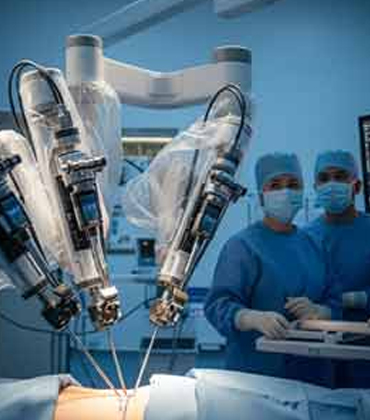
Robotic surgical innovation is driving the future of healthcare. However, the complexity, large footprint and high costs limit its widespread adoption in resource-limited settings. Distalmotion was founded to empower ambulatory surgery centers (ASC) with better access to robotic surgery, enabling them to offer best-in-class minimally invasive care to patients. A Swiss medical technology company, Distalmotion focuses on high-volume procedures such as inguinal hernia and cholecystectomy, which are the top procedures performed in ASCs. Its mobile, compact robotic surgery system, DEXTER, simplifies operations across the outpatient site of care by streamlining workflows and reducing turnover time, enabling teams to maximize throughput. Clinically, it provides the benefits of wristed robotics, which bring precision and dexterity over laparoscopic tools—especially beneficial when suturing or dissecting in confined spaces. Developed in collaboration with clinical experts and leading surgical centers, DEXTER received the CE mark in 2020 for general surgery, gynecology, and urology. In late 2024, it achieved FDA De Novo authorization for inguinal hernia repair, followed shortly by FDA 510(k) clearance for cholecystectomy in 2025, paving the way for U.S. entry. “Our primary mission is to bring the benefits of robotics in care settings like ASCs, where it remains limited today,” says Greg Roche, CEO. While robotic procedures are projected to double by 2032, most existing platforms remain incompatible with outpatient care. Their footprints are too large for multifunctional rooms, and their workflows require specialized staff, sterilization capabilities, and infrastructure enhancements. DEXTER is designed to work in standard operating rooms without making any structural changes. It can be easily maneuvered between rooms and adapted to different surgical workflows. The draped console ensures that the surgeon remains within the sterile field for immediate patient access, enabling real-time communication with the surgical team and promoting efficient coordination. The sterile design enables surgeons to effortlessly switch between laparoscopic and robotic techniques at the push of a button, without the need to redock. Its open architecture allows surgical departments to choose the most accommodating ecosystem for their site of care. Where traditional systems impose proprietary tools, DEXTER enables integration of best- in-class third-party technologies, particularly in visualization, where innovations like injectable-dye imaging can enhance outcomes. By giving hospitals and ASCs control over their toolsets, Distalmotion avoids the complexity of closed systems and supports their existing workflows, eliminating the need for significant alterations and added costs.


The human body possesses a remarkable, yet often dormant ability to heal itself. Genes for essential proteins, such as VEGF (which promotes blood vessel growth), IGF-1 (which rebuilds muscle), and Klotho (which protects vital organs), are hardwired into our DNA, waiting for the right signals to activate them. However, in the face of chronic disease or injury, these signals fade, and the body’s repair systems falter. Instead of regenerating, we form scar tissue, which weakens organs and diminishes resilience. Lionheart Health, Inc. has developed a groundbreaking solution: a bioelectric system designed to activate these natural repair programs. The technology combines tiny, battery-free micro-implants with external power discs to deliver precise electrical sequences. These bioelectric signals act as a wake-up call, prompting tissues to produce their own healing proteins and effectively restarting the body’s natural repair toolkit. A MULTI-FACETED APPROACH TO ORGAN REGENERATION To amplify the bioelectric effect, the company employs a multi-pronged strategy. The micro-implants are often paired with a refillable micro-infusion pump for targeted delivery of nutrients and growth factors, hydrogel scaffolds to maintain cell presence at the injury site, and even specially engineered stem cells that secrete protective proteins. Together, these components not only reawaken repair pathways but also provide the necessary support for proper regeneration. “We believe we’re on the right track,” says Howard J. Leonhardt, Executive Chairman and CEO. “Drugs alone can’t get us there, but the right bioelectric signals in the right places can. We want to offer total regeneration for all organs, from hearts and kidneys to pancreases and skin.”
In Vitro Diagnostics

Benjamin Kummer, Director of Clinical Informatics in Neurology, Mount Sinai Health System
In Vitro Diagnostics

Bill Dailey, Chief Medical Information Officer, Golden Valley Memorial Healthcare
Surgical Devices and Instruments
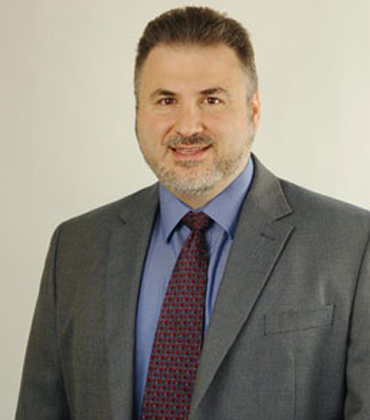
Dr. Domenico Savatta, Director of Adult Urologic Robotic Surgery, Newark Beth Israel Medical Center
Surgical Devices and Instruments

Christian Alvarez, Regional Director of Rehabilitation, Hartford HealthCare
In Vitro Diagnostics
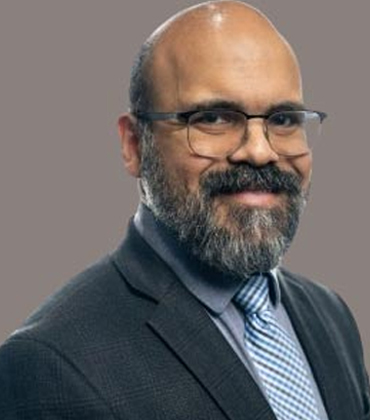
Julio Martinez-Silvestrini, Medical Director, Baystate Health
Surgical Devices and Instruments
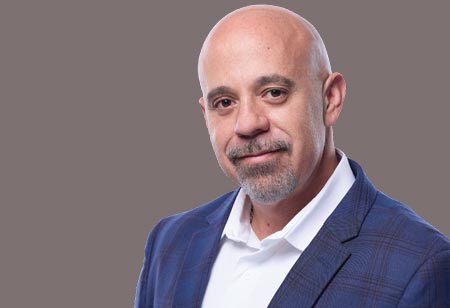
Dr. Dino Scanio, DHA, MPH, Multiservice Hospital Director of Clinics, Driscoll Children’s Hospital

In Vitro Diagnostics
Todd S. Danos, Vice President, Hospital Operations, Manning Family Children’s
The increased volume of surgical procedures worldwide is driven by population aging, rising chronic disease incidence, and greater access to healthcare in emerging markets.
Robotic minimally invasive surgery enhances precision, accelerates recovery, and optimizes healthcare delivery, offering patient-centered solutions with key benefits for providers, surgeons, and patients.
Innovation, Empathy, and Agility in Healthcare
SubQ It! reflects how healthcare innovation is moving beyond incremental change toward a strategic breakthrough. The company stands out for its focus on advancing clinical practice in ways that strengthen both patient experience and provider efficiency. Its role illustrates that advancement in healthcare is not solely about new tools but about rethinking established approaches and setting higher expectations for outcomes. By aligning innovation with practical needs, SubQ It! demonstrates how companies can influence the broader direction of the industry, showing that lasting impact comes from solutions designed to benefit patients, clinicians, and healthcare systems alike.
Such innovation thrives only when supported by leadership and operational clarity. Christian Alvarez of Hartford HealthCare highlights the role of real-time feedback loops and problem-solving frameworks that allow frontline teams to adapt quickly. By embedding agility into daily routines, organizations create the foundation for new tools to be adopted effectively and sustainably.
Equally vital is empathy. Dino Scanio of Driscoll Children’s Hospital emphasizes that patient dignity, transparency, and coordinated systems are not trade-offs against efficiency. They are the very enablers of it. When care models reflect the lived experiences of patients and families, outcomes improve and trust deepens.
This issue brings together these perspectives to illustrate a healthcare landscape in motion. Devices, systems, and mindsets are converging to deliver safer, smarter, and more compassionate care. As these stories reveal, the path forward lies in aligning technology with leadership and empathy, creating not just innovation for its own sake but solutions that transform lives and sustain progress.