Medical Tech Outlook Weekly Brief
Be first to read the latest tech news, Industry Leader's Insights, and CIO interviews of medium and large enterprises exclusively from Medical Tech Outlook

A surgeon can assess whether a replacement heart valve is functioning before the patient leaves the operating room. What cannot be established that day is how its tissue will respond to years of repeated opening and closing, or what treatment options may remain if another intervention becomes necessary. These questions influence more than the selection of a replacement valve. They shape decisions about tissue durability, device design and how patients may be treated as their needs change over time. Edwards Lifesciences [NYSE:EW] approaches structural heart innovation with that longer perspective. Its RESILIA tissue technology addresses a major cause of biological valve deterioration, while its surgical valve platforms incorporate features developed for specific anatomical and procedural requirements. Clinical studies then examine how these technologies perform over time. Its INSPIRIS RESILIA aortic valve and MITRIS RESILIA mitral valve demonstrate how advances in tissue preservation can be translated into devices designed for different positions within the heart.
Patients enter rehabilitation to practice movements they cannot perform on their own. When they lack the strength or balance to walk correctly, they may compensate in ways that reinforce poor movement patterns. LiteGait bridges the gap between what a patient cannot yet do and what therapy needs them to practice. Developed by Mobility Research, LiteGait provides adjustable body-weight support and postural control to accommodate each patient’s specific limitations while enabling many repetitions of well-formed movement and allowing clinicians to adjust support as needed. LiteGait supports patients with neurological, orthopedic, medical and developmental conditions, including stroke, spinal cord injury, traumatic brain injury and pediatric care. LiteGait began with a therapeutic technique, not an established equipment category. The company grew out of late1980s research into supported gait training and its potential to help patients practice stepping and walking while appropriately supported. The technique initially drew little commercial interest. Instead of abandoning the research, the researchers established the company to bring the approach into everyday clinical practice. Making that method useful required clinicians to understand how to position and support patients, making education integral to the company’s model. It provides pre- and post-sales training, onsite instruction, refresher courses, webinars and journal clubs, with both complimentary and fee-based options.


A neurosurgeon can begin an operation with an image that precisely captures the patient’s anatomy. As surgery progresses, however, the brain can deform, shift and change shape, creating a gap between the original image and the anatomy in front of the surgeon. When the map no longer matches the brain, navigation becomes less useful. “So that’s what we’re doing in surgery. We’re updating the map,” says Keith D. Paulsen, PhD, co-founder, board director, president & Chief Executive Officer. InSight Surgical Technologies is developing surgical guidance around that problem. Its lead I²UPDATE system is designed to account for brain deformation during surgery, while its quantitative fluorescence technology addresses signals that may not be visible to the human eye.
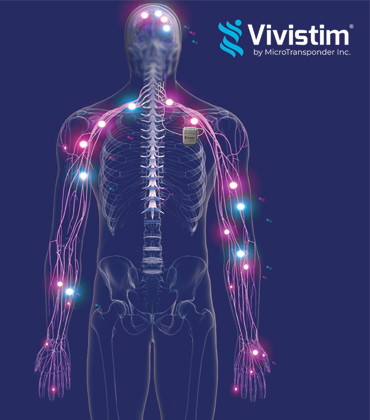
For millions of stroke survivors, recovery no longer means settling for physical limitations; it can mean breaking through them. Where progress once plateaued after traditional physical and occupational therapy, a new approach is helping patients move beyond that barrier. MicroTransponder®, Inc., a commercial-stage medical technology company, is changing the lives of stroke survivors with the Vivistim® Paired VNS™ System—a medical device that pairs vagus nerve stimulation (VNS) with rehabilitative stroke therapy. By harnessing the brain’s natural ability to rewire, MicroTransponder offers patients a powerful path to healing, renewed confidence, lasting independence, and something often in short supply: real, measurable progress. At the helm of the company driving this meaningful breakthrough is CEO Richard Foust, a leader who has transformed MicroTransponder from a research-based startup into a commercial-stage pioneer in stroke care. “We are not tweaking an old system—we have created a new one. We spent years developing a patented mechanism that pairs vagus nerve stimulation with occupational and physical therapy to help stroke survivors regain upper limb function well beyond what they had been limited to with traditional therapy,” explains Foust. A Scientific Breakthrough The foundation of MicroTransponder’s innovation was laid over a decade ago, when a landmark paper in Nature outlined a new approach to rewiring the brain. The therapy is based on the principle of neuroplasticity—the brain’s ability to reorganize and form new connections. Stimulating the vagus nerve during functional activities that were lost as a result of stroke helps stroke survivors accelerate motor recovery by strengthening the appropriate neural pathways. Traditional stroke therapies rely on repetition to help patients regain arm and hand function, but progress often stalls. MicroTransponder’s system offers an evidence-based therapy to help stroke survivors regain meaningful improvements in arm and hand function.
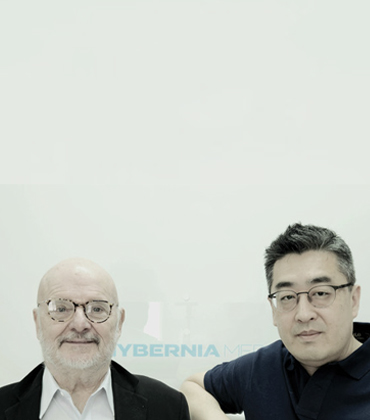
Clot extraction (thrombectomy) is a critical procedure for stroke patients, achieving technical success rates above 90 percent. However, while thrombectomy effectively removes the clot, it does not address the underlying damage to the brain tissue caused by one, the disrupted blood flow to the brain (ischemia) from the blockage of the brain artery by the clot and two, the secondary damage caused by reperfusion injury. Reperfusion injury is caused by the sudden inflow of blood following the reopening of a clogged brain artery and is largely an inflammatory response accompanied by oxidative stress that exacerbates brain damage. As a result, less than 20 percent of patients experience a full recovery. Therapeutic hypothermia is a well-known neuroprotective strategy that slows metabolism and reduces cell death through multiple protective mechanisms. Yet, systemic (whole body) cooling in stroke patients is often too slow and carries risks such as shivering, cardiovascular instability, infection, and immune suppression. In fact, it typically takes many hours to reduce body and brain temperatures by a few degrees Celsius—a complex undertaking which is often unsuccessful. These limitations make it impractical as a neuroprotective treatment for stroke. In contrast, selective endovascular brain cooling offers a promising alternative by delivering rapid, targeted hypothermia directly to the affected brain tissue. This method achieves protective brain tissue temperatures within minutes without compromising overall body function or introducing widespread systemic complications. Hybernia Medical is positioning itself at the forefront of this innovative approach. The company has developed a catheter-based system designed to provide localized brain cooling immediately following thrombectomy. This solution works within minutes, cooling the targeted brain tissue directly through a catheter introduced via the same arterial pathway used during clot extraction. “We developed a device that cools the brain directly through a catheter system in a highly selective, precise, and fast manner,” says Jae Choi, co-founder and CEO. The approach is built on years of rigorous research and development, evolving through extensive tests and large-animal studies and building on numerous preclinical stroke experiments that have validated both its safety and feasibility. Early clinical signals suggest that when combined with thrombectomy, localized cooling could lead to significantly improved outcomes. Beyond the cooling mechanism itself, Hybernia Medical’s system is engineered with advanced technology to ensure optimal performance. Embedded sensors provide real-time feedback that allows the device to adjust dynamically to the patient’s anatomical and physiological environment. This intelligent design ensures that the cooling process is not only effective but also consistent and safe. The infusion system that drives the cooling process has been optimized for maximum efficiency by using minimal fluid volumes—down to a fraction of a milliliter—which enhances heat transfer at the tissue level without jeopardizing patient safety or causing systemic instability.
In Vitro Diagnostics

Heeteak Chung, Ph.D., MBA, Director of Medical Physics, Baylor Scott and White Health
Orthopedic Devices and Instruments

Dr. Gilbert Tang, Academic Director, Structural Heart Program, Mount Sinai Health System
Drug Delivery Solutions

Jeremy Kryszan, Director of IT Security, Parrish Medical Center
Medical Device Design and Development
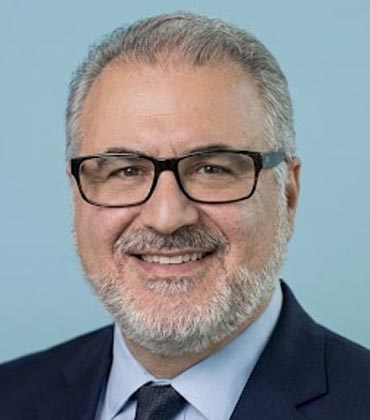
Domenico Savatta, Founder, Medical Expert Witness, Innovative Urology
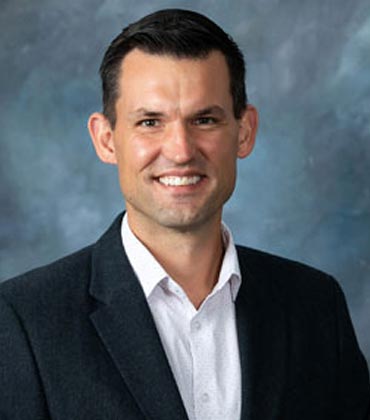
Jordan Gillund, Director of Operations, Medical & Surgical Specialties, MercyOne

Vincent Barba, VP-Patient Care and Safety, Chief Medical Officer and Safety Officer, Matheny Medical and Educational Center
Endoscopy
Joseph Ingrassia, Interventional Cardiologist, Director Vascular Medicine & Endovascular Intervention, Hartford Hospital
Supported gait therapy systems improve walking recovery, enhance safety, support rehabilitation progress, and promote long-term functional independence.
Structural heart innovation companies develop advanced medical devices, improve minimally invasive treatments and support safer, more effective cardiovascular care through research and technology.
Advancing Medical Technology through Better Patient Care
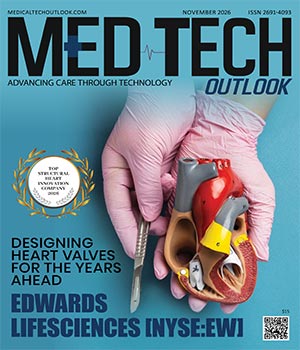
The cover story features Edwards Lifesciences [NYSE:EW] recognized as Top Structural Heart Innovation Company 2026, for its work on improving heart valve replacement. Its RESILIA tissue technology is designed to limit calcification, which can cause biological valves to deteriorate. The INSPIRIS RESILIA aortic valve and MITRIS RESILIA mitral valve use this tissue in designs tailored to the needs of each heart valve, with features that account for potential future procedures.
The same focus on improving care extends to surgery and rehabilitation. InSight Surgical Technologies, recognized as Top Emerging Autonomous Surgical Navigation Systems 2026, is developing a way to keep surgical images aligned with the brain as it shifts during an operation. Its I²UPDATE system uses stereovision and computational modeling to update guidance as the anatomy changes.
LiteGait, recognized as Top Supported Gait Therapy System 2026, helps patients practice standing and walking before they can move independently. Its adjustable support allows therapists to assist weaker parts of the body and help patients practice better walking patterns.
The issue’s clinical contributors reinforce the importance of responsible implementation. Vincent Barba, VP-Patient Care and Safety, Chief Medical Officer and Safety Officer, Matheny Medical and Educational Center, discusses that new technologies must make care safer and improve patient outcomes, rather than simply introduce new capabilities. Joseph Ingrassia, Interventional Cardiologist, Director Vascular Medicine & Endovascular Intervention, Hartford Hospital describes how additional training, consistent vascular testing and collaboration with other specialties help clinicians make better treatment decisions, including when an invasive procedure may not be appropriate.
Together, these perspectives show that medical progress depends on innovations that improve clinical decisions and patient care. We invite readers to explore this edition to see how engineering, evidence and clinical judgment are shaping that progress.